PaintingLocations · Article
13 Famous Paintings and the Real Places Behind Them
People search for the real place behind a painting far more often than for the painting itself. These are thirteen famous works whose location on the ground can still be found and, in most cases, visited — each with an honest note on how firm the evidence is and how much of the scene survives.
Every painting here is one of the site's Class-A works — the small group where the real-world location is specific rather than a vague region. They are not equally certain. For five, a museum catalogue or a published study fixes the exact spot the artist worked from. For the rest, the place is documented and unmistakable but the precise standpoint is not, or the scene was partly composed, or what you can visit today is a transformed version of what was painted. The badge on each entry says which.
We have not paired these with modern photographs: this is about where the places are and what has become of them, in the artists' own images and the record.
How to read this list
- Independently verified viewpoint
- A museum catalogue or a published study fixes the spot the artist worked from. You can stand roughly where they stood.
- Independently verified location
- Scholarship confirms the place, but the scene was composed in the studio, so there is no single easel position to find — the connection is the ground itself.
- Identified real location
- The real place is documented and unmistakable. The precise standpoint is approximate, so we do not claim an exact spot.
- Identified area
- Located to a village or district. The exact spot is not recorded; the link to the place may be a living tradition rather than a view.
The thirteen real-world locations. Tap a marker to open its painting page.
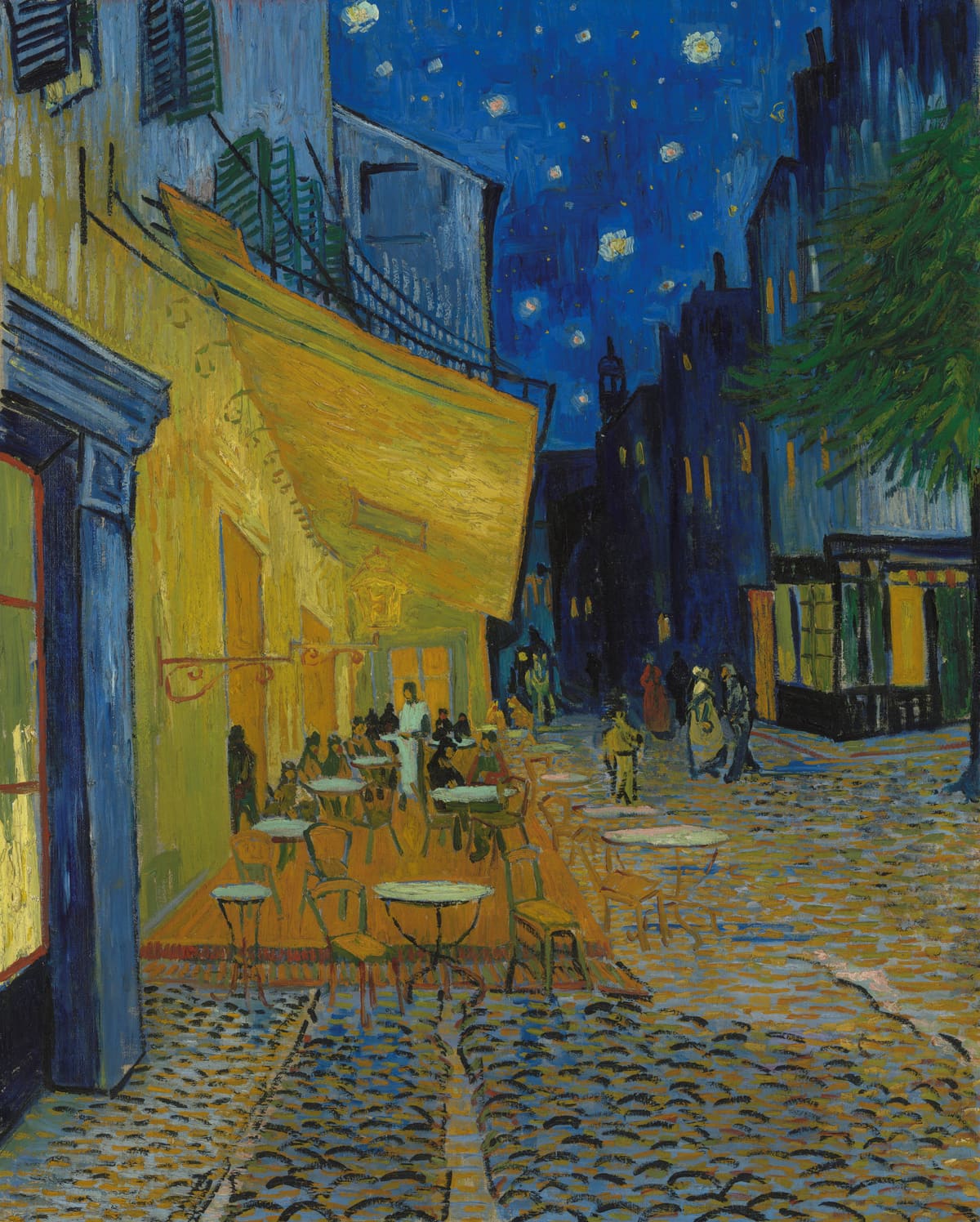
1 Café Terrace at Night
- Artist
- Vincent van Gogh
- Painted
- 1888
- Real place
- Place du Forum, Arles, France
- Confidence
- Independently verified viewpoint
Can you visit it? Yes. The café on the square still trades, its front repainted the same yellow; it now calls itself Le Café La Nuit.
What has changed: The terrace, the tall house-fronts and the square are all still there. The gas lamp is gone and the signage is modern, but the geometry Van Gogh worked from — the north-east corner, looking across the lit terrace — is intact.
Van Gogh painted the scene outdoors over several September nights, straight from the motif by lamplight — his first night picture, and one built entirely from colour, with no black. The Kröller-Müller Museum, which owns it, and the Van Gogh Museum's edition of his letters both place him on the Place du Forum looking south-west.
On PaintingLocations: the café Van Gogh painted on the Place du Forum. See the viewpoint evidence and the story of the painting Arles in art
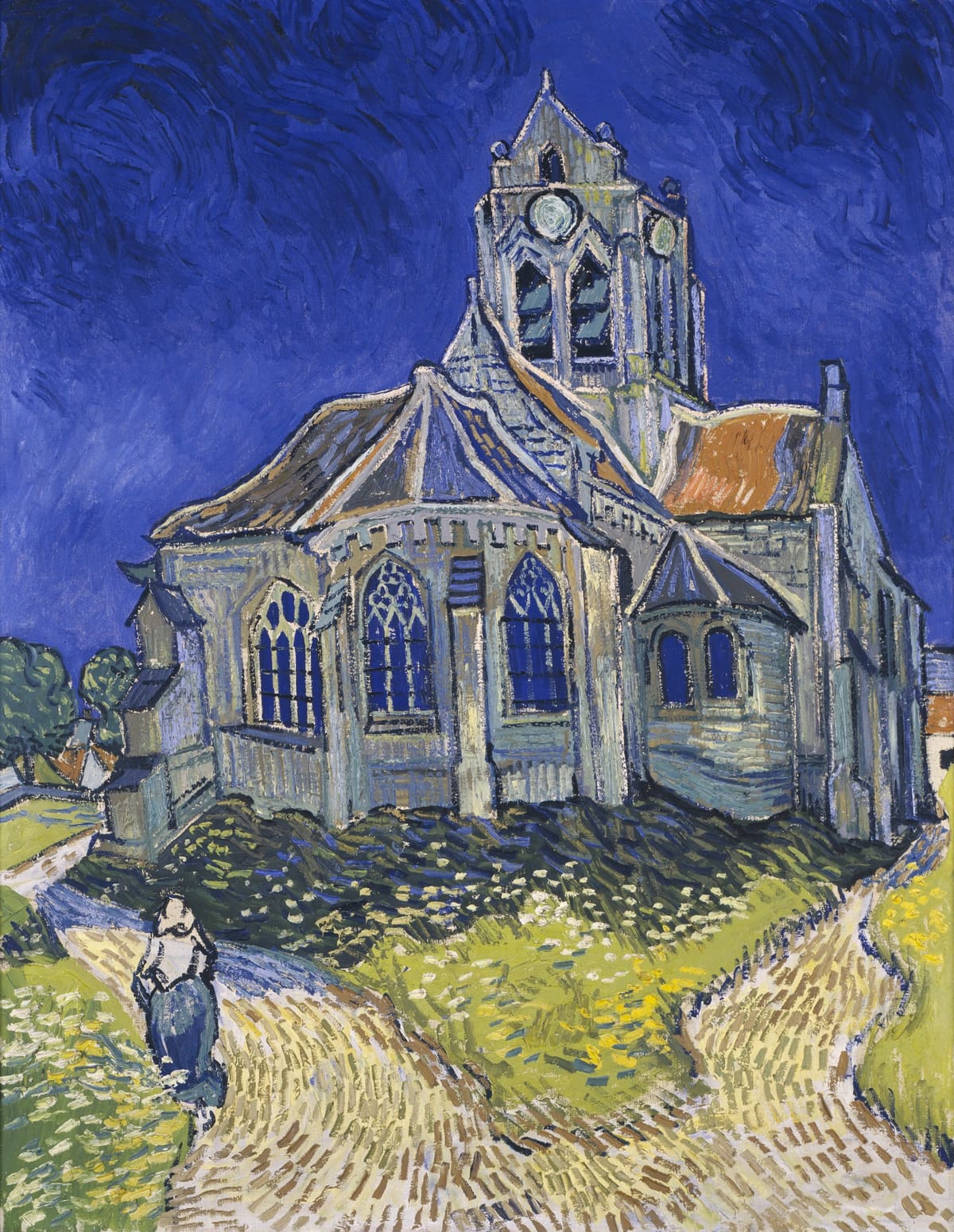
2 The Church at Auvers
- Artist
- Vincent van Gogh
- Painted
- June 1890
- Real place
- Notre-Dame de l'Assomption, Auvers-sur-Oise, France
- Confidence
- Independently verified viewpoint
Can you visit it? Yes. The church is unchanged, and the town has set a marker on the lane — part of a signed sur les pas de Van Gogh trail — at the point the picture was made.
What has changed: Almost nothing. The apse, the buttresses, the two paths forking around the building and the bank of grass are all still recognisable; only the road surface has been made up.
Van Gogh painted the church in the last weeks of his life, from the lane along its north-east side, looking back at the chevet. The Musée d'Orsay catalogue for L'église d'Auvers-sur-Oise, vue du chevet and letter 890 fix the standpoint by the fork in the path — one of the most exact then-and-now matches in his work.
On PaintingLocations: the lane behind the church at Auvers. Read the full location guide more works by Van Gogh
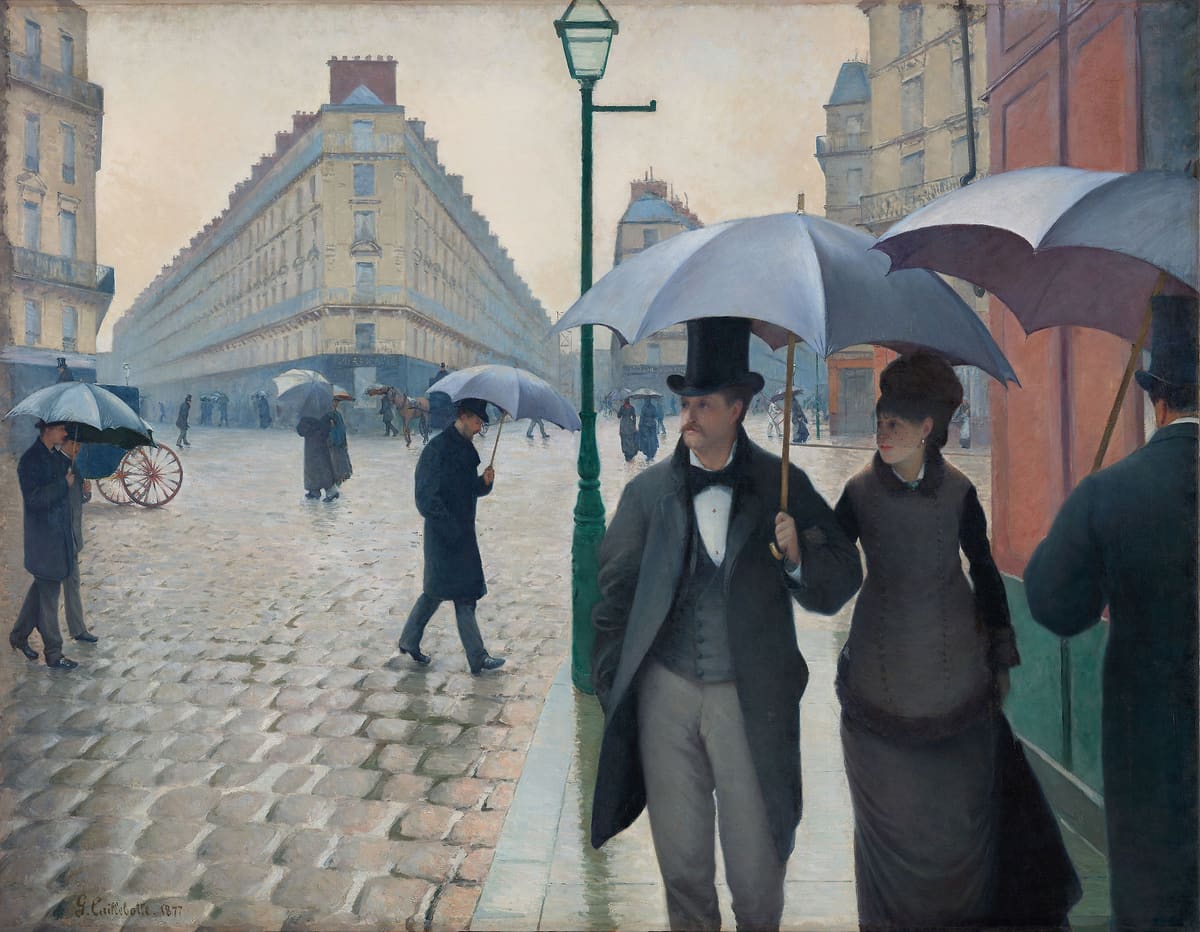
3 Paris Street; Rainy Day
- Artist
- Gustave Caillebotte
- Painted
- 1877
- Real place
- Rue de Turin / rue de Moscou (Place de Dublin), 8th arrondissement, Paris, France
- Confidence
- Independently verified viewpoint
Can you visit it? Yes, and easily. The junction is now the Place de Dublin, a two-minute walk from the Gare Saint-Lazare.
What has changed: The tall, wedge-shaped Haussmann blocks that meet at an acute angle are exactly as Caillebotte drew them, shopfronts included. The cobbles have gone under asphalt and the cast-iron street lamp has been replaced; the buildings have not.
Caillebotte built the picture on a rigorous one-point perspective centred on the apex of the two streets, with the big central lamppost splitting the canvas. The Art Institute of Chicago identifies the exact corner. Stand on the traffic island and the acute angle of the buildings lines up at once.
On PaintingLocations: Caillebotte's rainy-day crossroads near Saint-Lazare. Explore the painting and the corner it shows Paris in art
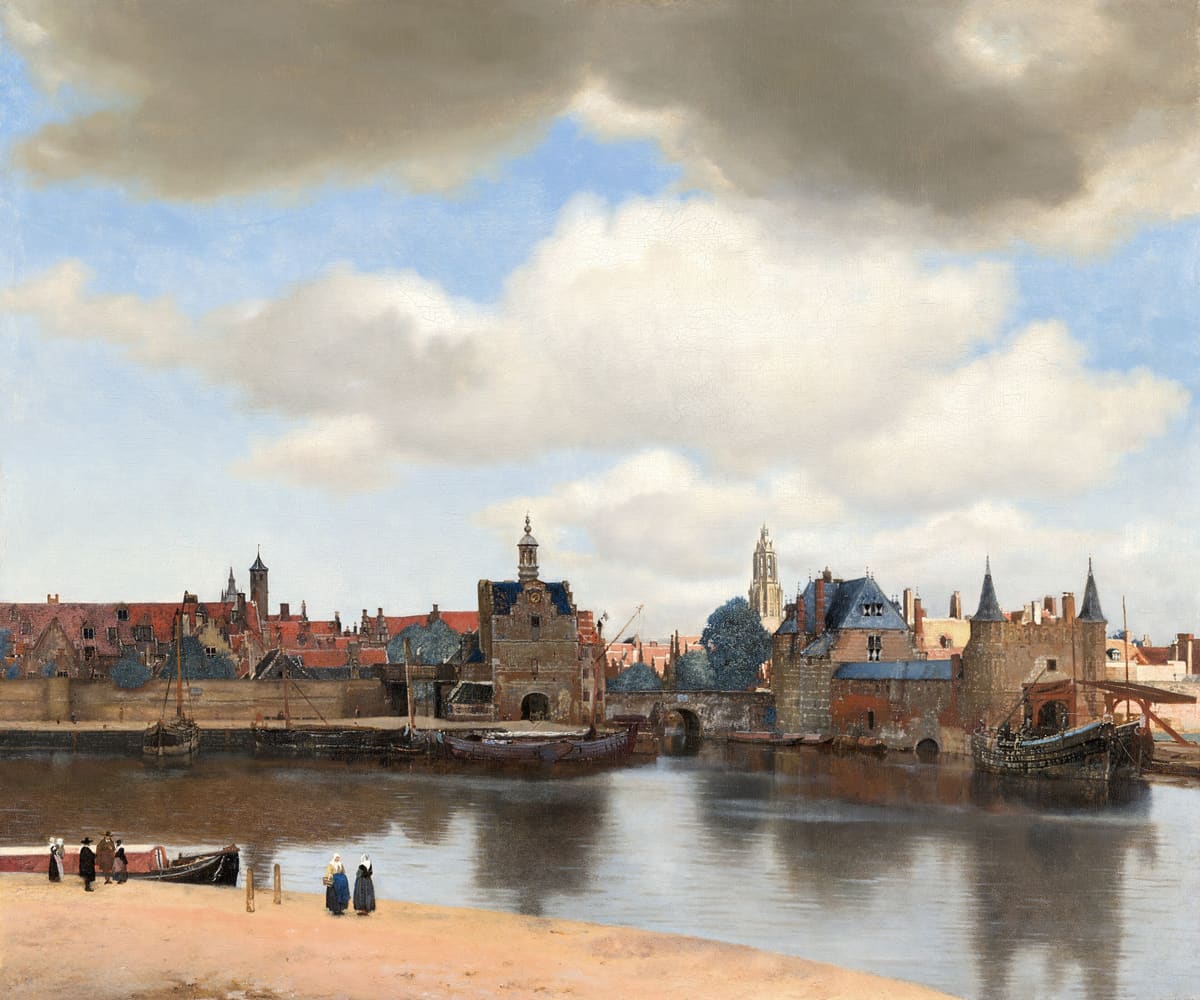
4 View of Delft
- Artist
- Johannes Vermeer
- Painted
- c. 1660–61
- Real place
- The Hooikade, south bank of the Kolk, Delft, Netherlands
- Confidence
- Independently verified viewpoint
Can you visit it? Yes. The stretch of quay Vermeer worked from is the present Hooikade, across the harbour basin from the old town.
What has changed: The Nieuwe Kerk tower — sunlit in the painting — and the line of the waterfront are still there. But the two city gates that frame the composition, the Schiedam and Rotterdam gates, were demolished in 1834 and 1836, so the near skyline has lost its bookends.
The Mauritshuis places Vermeer's viewpoint on the south side of the Kolk, a raised position established by the angle of the Nieuwe Kerk tower against the quay. He compressed and rearranged parts of the skyline for effect, but the vantage itself is real and reachable.
On PaintingLocations: the View of Delft viewpoint on the Hooikade. See what survives and what was pulled down Delft in art
5 La Place des Pyramides, Paris (I)
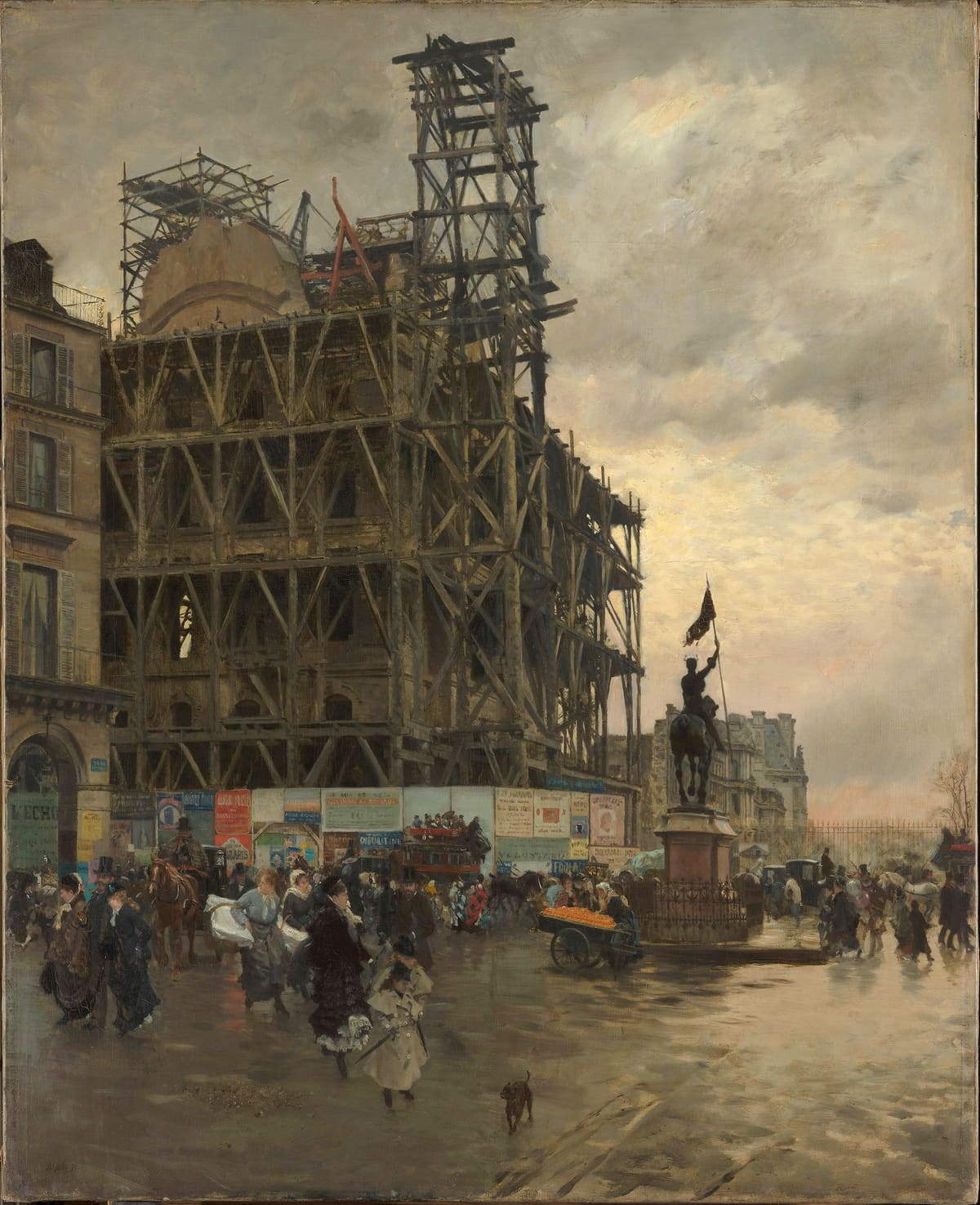
- Artist
- Giuseppe De Nittis
- Painted
- 1875
- Real place
- Place des Pyramides, 1st arrondissement, Paris, France
- Confidence
- Identified real location
Can you visit it? Yes. The square is on the rue de Rivoli, beside the Tuileries Garden.
What has changed: The gilded equestrian statue of Joan of Arc by Emmanuel Frémiet — brand new when De Nittis painted it, unveiled in 1874 — is still the centrepiece, and the arcaded rue de Rivoli behind it is unchanged. The traffic and the figures belong to their moment; the setting does not.
De Nittis, an Italian painter working in Paris, treated the square as modern-life reportage: wet pavements, carriages, a scatter of pedestrians around the new monument. The Musée d'Orsay holds the picture. No single easel position is documented, but the golden statue makes the spot unmistakable.
On PaintingLocations: the gilded Joan of Arc statue in De Nittis's square. See the painting and the monument today Paris in art
6 Vue du canal Saint-Martin
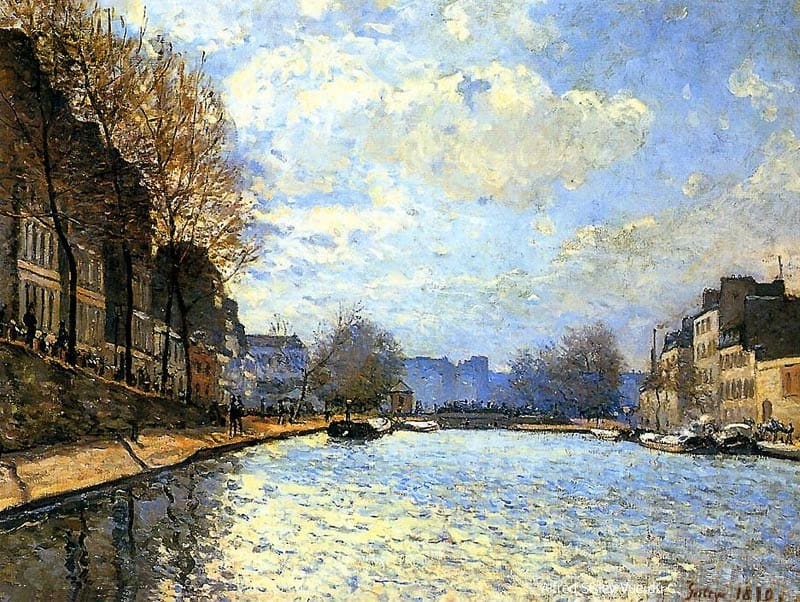
- Artist
- Alfred Sisley
- Painted
- 1870
- Real place
- Canal Saint-Martin near the Récollets lock, 10th arrondissement, Paris, France
- Confidence
- Identified real location
Can you visit it? Yes. The canal is one of the most walked stretches of eastern Paris; the reach Sisley painted is around the écluse des Récollets.
What has changed: The canal, its double locks and the high iron footbridges still work exactly as shown. The quayside plane trees have grown; the barges are pleasure craft now, not freight.
Sisley painted the canal in 1870, months before the Franco-Prussian War scattered the young Impressionists, looking along the water toward a lock. The Musée d'Orsay holds it. The exact standpoint is approximate, but the lock-and-footbridge motif pins the stretch.
On PaintingLocations: Sisley's reach of the Canal Saint-Martin. Read the location notes more works by Sisley
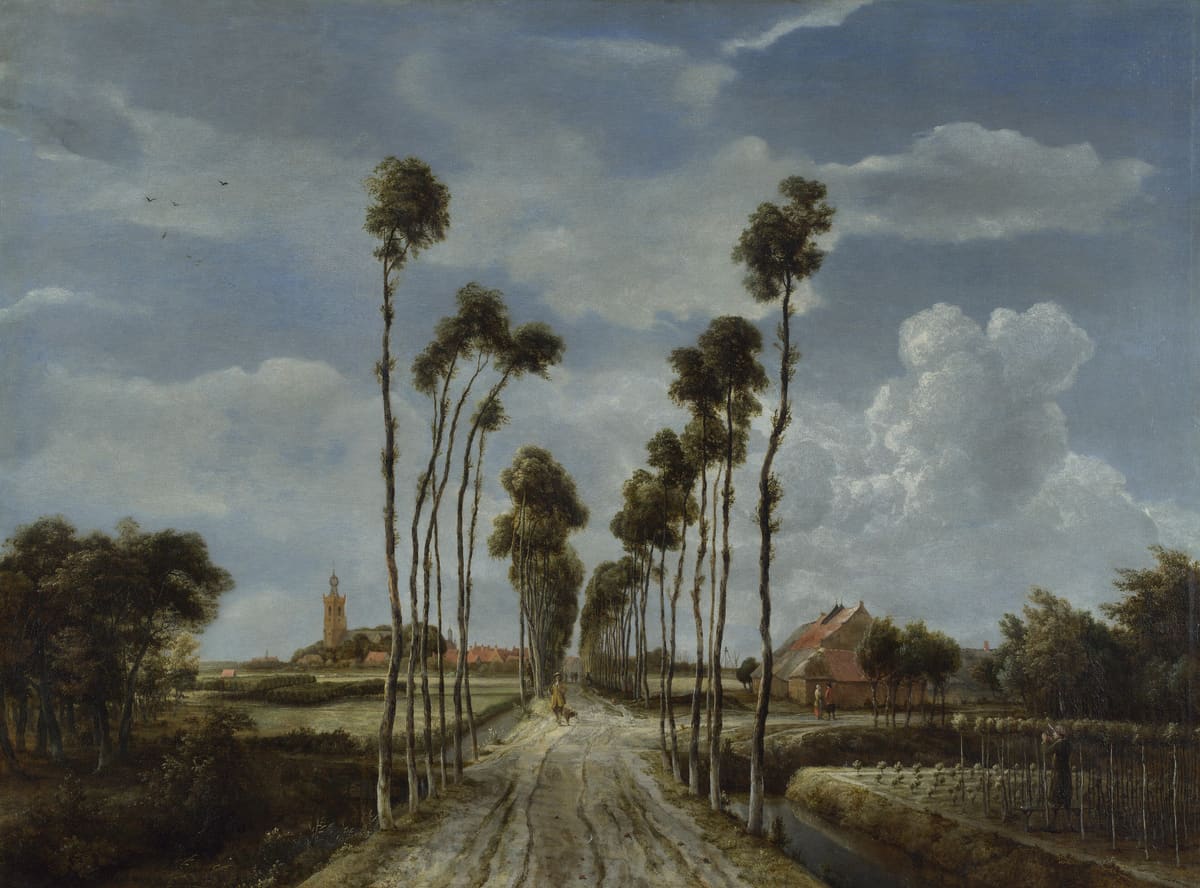
7 The Avenue at Middelharnis
- Artist
- Meindert Hobbema
- Painted
- 1689
- Real place
- The tree-lined road into Middelharnis, Goeree-Overflakkee, Netherlands
- Confidence
- Identified real location
Can you visit it? Yes. The dead-straight avenue still runs into the village from the polder, and it is signposted locally as the scene of the painting.
What has changed: The road and its ruler-straight line are the same. The tall, spindly trees have been felled and replanted more than once since 1689, so the individual trees are not Hobbema's — but the receding avenue, with the church spire ahead, survives.
Hobbema's picture is almost a diagram of one-point perspective: a single road driving to a low horizon between thin trees. The National Gallery in London, which owns it, identifies the avenue at Middelharnis. The precise spot Hobbema set up is approximate; the alignment on the ground is not in doubt.
On PaintingLocations: Hobbema's ruler-straight avenue at Middelharnis. Read how the avenue was identified more works by Hobbema
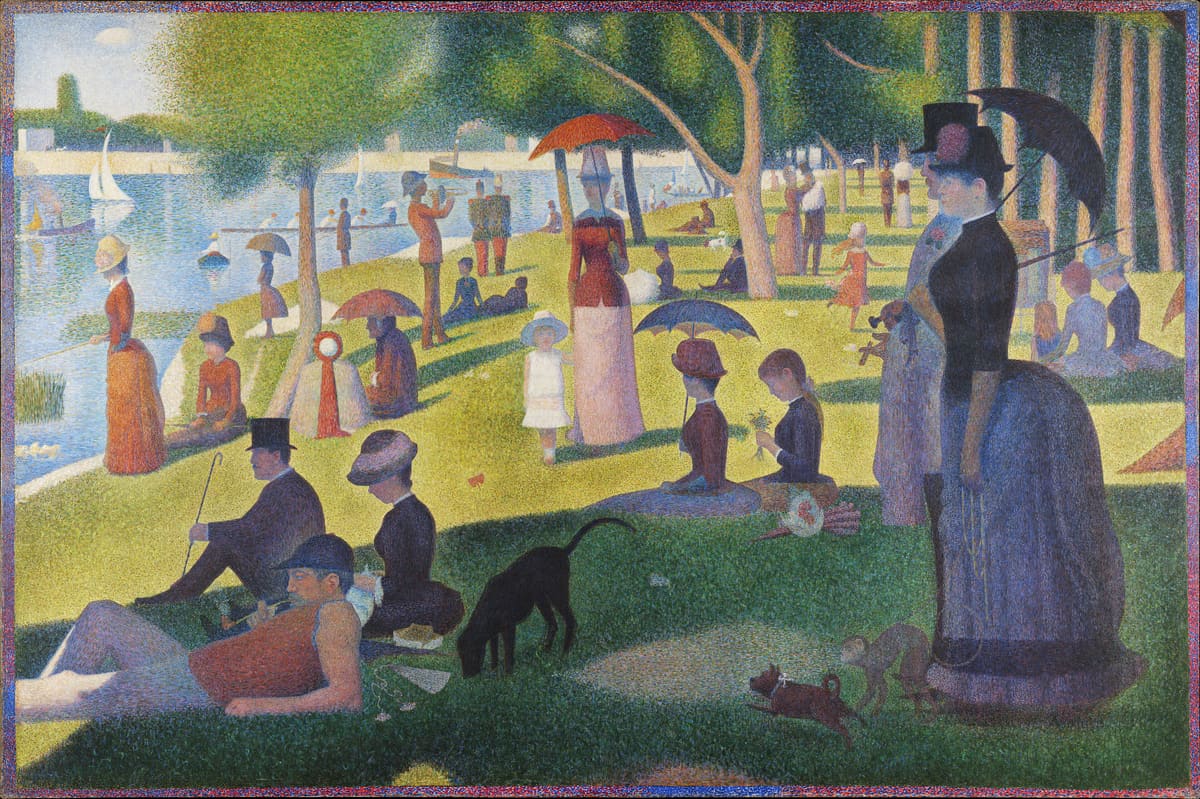
8 A Sunday on La Grande Jatte
- Artist
- Georges Seurat
- Painted
- 1884–86
- Real place
- Île de la Grande Jatte, Neuilly-sur-Seine, France
- Confidence
- Independently verified location
Can you visit it? Yes. The island is a public park, the Parc de l'Île-de-la-Jatte, on the Seine just west of Paris.
What has changed: The island and its riverbank are still there, now laid out as parkland and ringed by apartment blocks. Seurat's scene was a constructed, idealised Sunday rather than a topographical record, so there is no exact view to line up — the connection is the ground itself.
Seurat spent two years on the picture, making dozens of small oil studies on the island before assembling the final canvas point by point in the studio. The Art Institute of Chicago documents the studies made on the Île de la Grande Jatte. What you visit is the setting, not a viewpoint.
On PaintingLocations: the real island behind La Grande Jatte. Read the painting's story and technique more works by Seurat
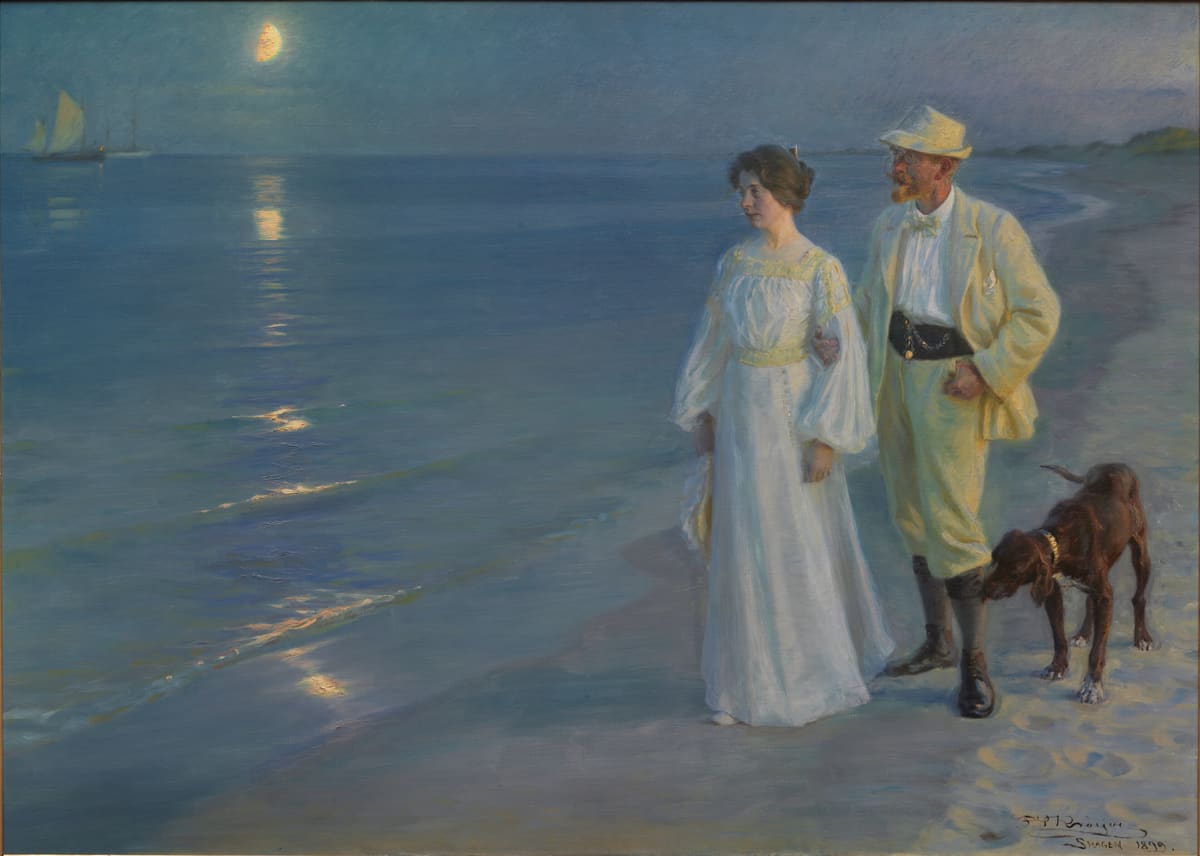
9 Summer Evening at Skagen Beach – The Artist and his Wife
- Artist
- Peder Severin Krøyer
- Painted
- 1899
- Real place
- Sønderstrand, Skagen, Denmark
- Confidence
- Independently verified location
Can you visit it? Yes. The south beach at Skagen, on Denmark's northern tip, is open shoreline; the Skagens Museum in the town holds much of the colony's work.
What has changed: A beach at dusk is hard to date. The stretch of sand and the low, even light Krøyer chased — the blå time, the blue hour — are as they were; the town behind has grown.
Krøyer painted himself and his wife Marie walking the shoreline at the blue hour, when sky and sea lose their edge. The identification of Skagen's Sønderstrand is standard in the Krøyer literature; the painting itself is in the Hirschsprung Collection, Copenhagen. The Skagen light that drew a whole colony of Nordic painters is why the scene still reads true.
On PaintingLocations: Krøyer's stretch of Skagen shoreline. See the location and where the original hangs Skagen in art
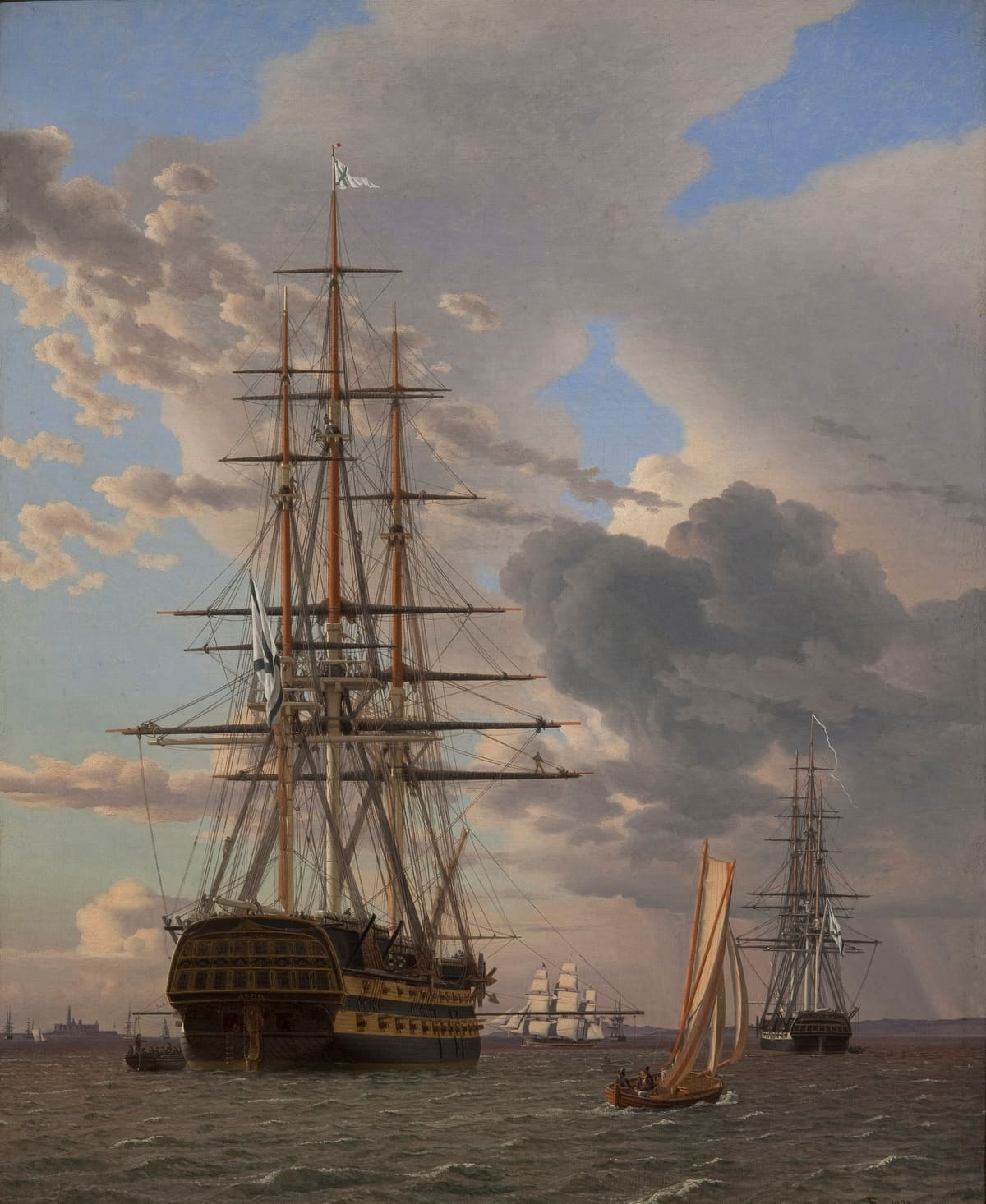
10 The Russian Ship of the Line "Asow" and a Frigate at Anchor in the Roads of Elsinore
- Artist
- Christoffer Wilhelm Eckersberg
- Painted
- 1828
- Real place
- The Sound (Øresund) off Kronborg Castle, Helsingør, Denmark
- Confidence
- Identified real location
Can you visit it? Yes, from the shore. Kronborg Castle — the Elsinore of Hamlet, a UNESCO site — is unchanged, and the Helsingør waterfront looks straight out across the Sound where the ships lie.
What has changed: The castle silhouette is identical. The vantage in the painting is on the water itself, roughly where a ship would ride at anchor, so no dry spot matches it exactly — but the view of Kronborg across the Sound is the same one.
Eckersberg, the father of the Danish Golden Age, studied the Russian warships while they lay at Copenhagen and set them in the Roads of Elsinore with Kronborg behind. The Statens Museum for Kunst (SMK) in Copenhagen holds it. Treat this as the setting rather than a standpoint.
On PaintingLocations: Kronborg Castle in Eckersberg's marine view. See the painting and its setting more works by Eckersberg
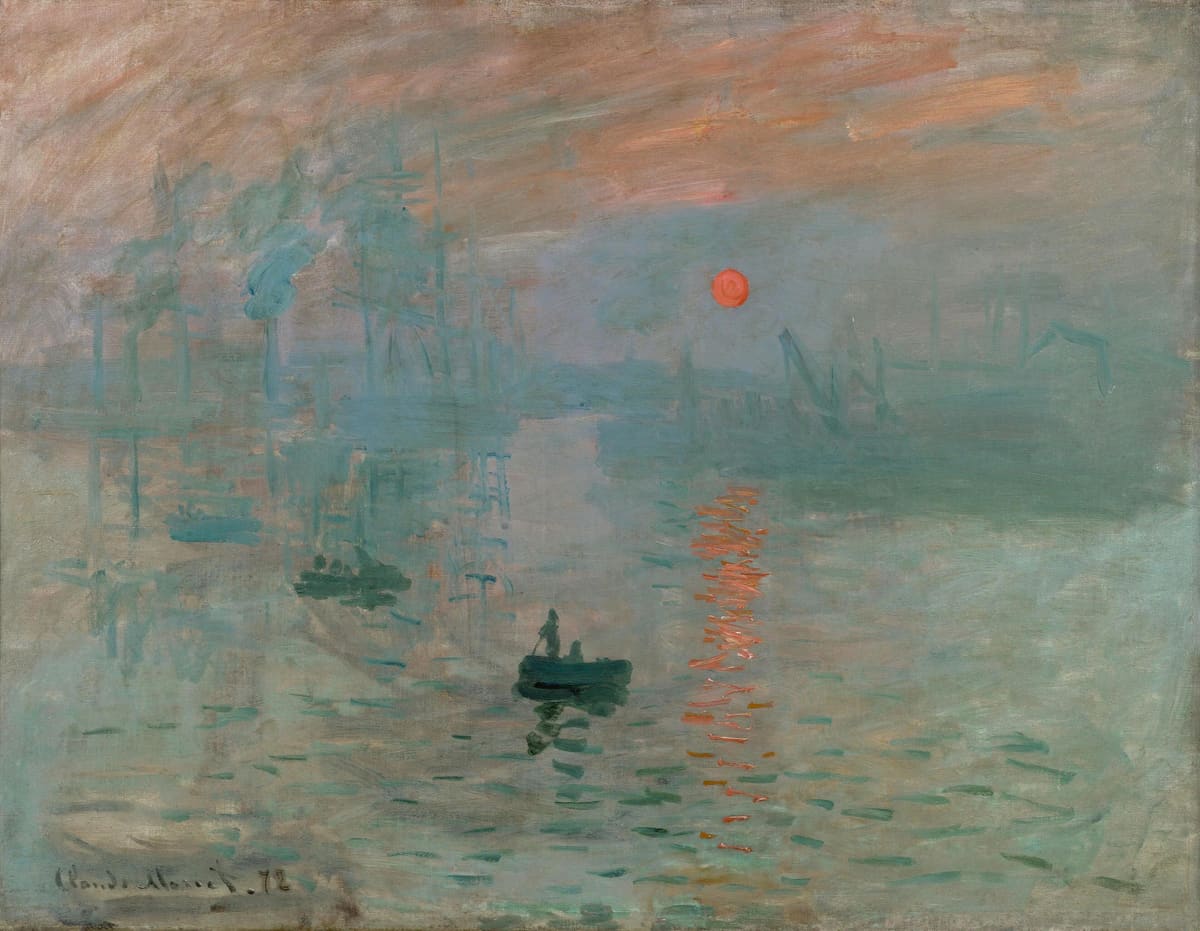
11 Impression, Sunrise
- Artist
- Claude Monet
- Painted
- 1872
- Real place
- The outer harbour of Le Havre, France
- Confidence
- Independently verified viewpoint
Can you visit it? Partly. You can stand on the waterfront and look out over the same harbour basin — but the buildings behind that viewpoint are entirely post-war.
What has changed: Almost everything built. Le Havre was flattened by bombing in 1944 and rebuilt to Auguste Perret's design, now a UNESCO ensemble, so the Grand-Quai hotel Monet worked from is gone. The harbour water, the breakwaters and the south-east sightline toward the sunrise remain.
A team led by the astronomer Donald Olson (Texas State University) reconstructed the tides, the sun's angle and the drift of the smoke and dated the scene to a mid-November 1872 morning, seen from an upper window on the Grand-Quai. The picture, in the Musée Marmottan Monet, gave the movement its name after a hostile 1874 review seized on the word impression.
On PaintingLocations: the Le Havre harbour view that named Impressionism. Read the dating study and the location more works by Monet
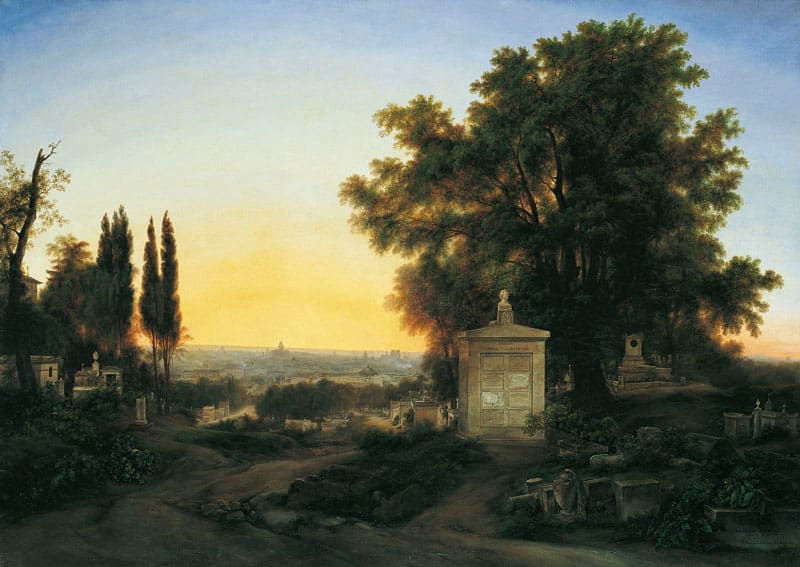
12 Paris, vu des hauteurs du Père Lachaise
- Artist
- Louise-Joséphine Sarazin de Belmont
- Painted
- c. 1850
- Real place
- The upper walks of Père-Lachaise Cemetery, 20th arrondissement, Paris, France
- Confidence
- Identified real location
Can you visit it? Yes. Père-Lachaise is open daily and free; the high ground in its eastern section still gives a wide view west over the city.
What has changed: Here you visit the vantage, not the view. The 1850 panorama shows a low-rise city under a big sky; the same rise now looks out past mature cemetery trees to a skyline with the Tour Montparnasse and tower blocks. The interest is the contrast.
Sarazin de Belmont, a pupil of Jean-Victor Bertin and a specialist in topographical landscape, set up on the cemetery's heights to take the city in a single sweep. The Musée des Augustins in Toulouse holds the picture. The exact spot is not recorded, and the panorama itself has changed beyond recognition.
On PaintingLocations: the rise in Père-Lachaise the painter climbed around 1850. Compare the 1850 panorama with the view now Père-Lachaise Cemetery in art
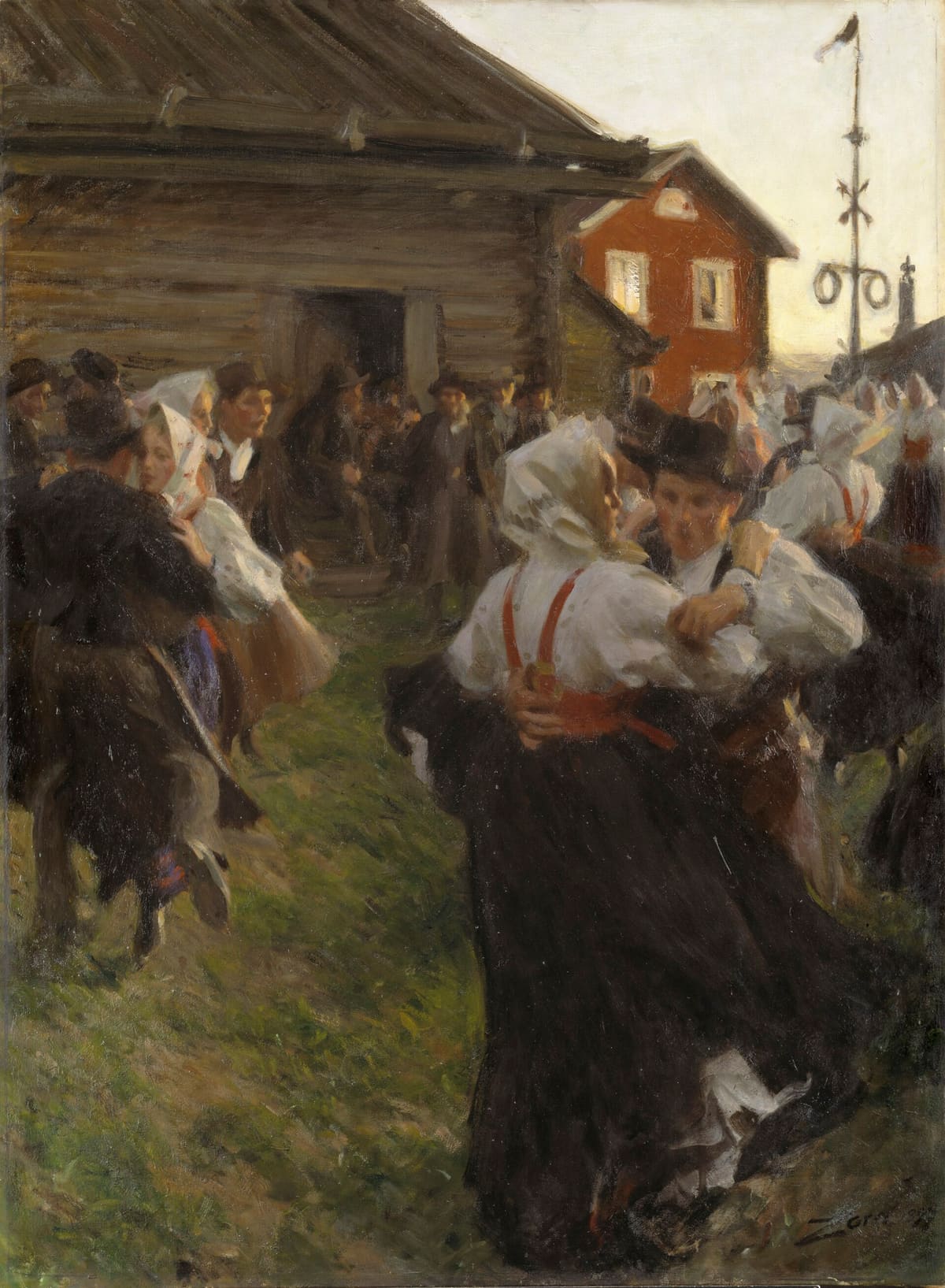
13 Midsummer Dance
- Artist
- Anders Zorn
- Painted
- 1897
- Real place
- Morkarlby, Mora, Dalarna, Sweden
- Confidence
- Identified area
Can you visit it? Broadly. Mora, in Dalarna, is very visitable — Zorn's house and museum, the Zorngården, are in the town — and Midsummer's Eve is still danced around a maypole across the region every year. The specific farmyard Zorn painted is not recorded.
What has changed: There is no fixed spot to match. What continues is the event: the pole, the dancing at dusk, the light that barely fades. Zorn painted it near his own summer place at Morkarlby, now part of Mora.
Zorn made the picture at dusk on Midsummer's Eve, a swirl of dancers around the pole in the long northern twilight. The Nationalmuseum in Stockholm, which owns it, places the scene at Mora. Unlike the other twelve works here, its link to the ground is a living tradition rather than a surviving view.
On PaintingLocations: Zorn's Midsummer's-eve dance at Mora. See the painting and where it hangs more works by Zorn
Where to go from here
All thirteen locations are on the interactive map, alongside every other painting the site has placed in the real world — a little over two hundred so far, from exact viewpoints to broad landscapes. To browse by kind of place, start with the exact viewpoints or the full painting index.