View of the Sea at Scheveningen
A squall breaking over the beach at Scheveningen — painted on the spot in the wind, with sand still embedded in the paint.
Scheveningen
The painting depicts a real landscape or cityscape. The precise viewpoint the artist used may be unknown, so the marker shows the general area.
View of the Sea at Scheveningen — at a glance
- Artist
- Vincent van Gogh (1853–1890)
- Year
- 1882
- Movement
- Hague School period / early Van Gogh
- Place
- The beach at Scheveningen, The Hague, the Netherlands
- Viewpoint
- The working fishing beach in a storm — beach and sea remain; village now built up
- Medium
- Oil on canvas on panel
- Dimensions
- c. 35 × 51 cm
- Now at
- Van Gogh Museum, Amsterdam (stolen 2002, recovered 2016)
Overview
View of the Sea at Scheveningen is one of only two seascapes surviving from Vincent van Gogh's early years in the Netherlands. He painted it in August 1882, standing on the beach during a squall: a grey-green sea whipped into white breakers, a stormy sky, a fishing pinck (flat-bottomed boat) being launched or hauled, and small dark figures of crew and onlookers on the sand. It is oil on canvas on panel, about 35 by 51 cm, and it is in the Van Gogh Museum, Amsterdam.
The story behind the painting
Artist's own account Van Gogh described the conditions in a letter to his brother Theo: he painted in such wind that he could hardly keep the easel standing, and grains of sand blew into the wet paint — which are still visible in the surface today. He wiped some off and painted on.
Scholarship In December 2002 the painting was stolen from the Van Gogh Museum in a night-time break-in. It was recovered by Italian police in 2016 near Naples, in the possession of a Camorra clan, and returned to the museum.
Where was View of the Sea at Scheveningen painted?
Scholarship Scheveningen is the seaside district of The Hague, on the North Sea coast of the Netherlands — in Van Gogh's time a working fishing village with its boats drawn straight up onto the open sand, as well as a growing resort. The beach and the sea are still there, but Scheveningen is now heavily built up with a boulevard, a pier and hotels, and the flat-bottomed beach fishing boats are long gone. The picture records the working beach in a storm rather than a fixed viewpoint.
What is in the painting?
The sea takes up the middle of the panel, grey-green and broken into white crests under a heavy sky of grey and yellowish cloud. A fishing boat sits at the water's edge with figures around it; more small dark figures stand on the wet sand in the foreground. The paint is thick, rapid and blustery, matching the weather.
Look closely
The sand in the paint
Grains of beach sand are embedded in the surface, blown into the wet paint as Van Gogh worked in the wind.
The fishing boat
A flat-bottomed beach boat (pinck) at the water's edge with its crew around it — hauled straight onto the open sand.
The breakers
The grey-green sea is dragged into white crests with loaded, rapid strokes.
The figures on the sand
Small dark shapes of crew and onlookers stand on the wet foreground beach.
Analysis
Composition and technique
A low beach foreground, a band of churning sea, and a big storm sky — painted fast and thick in the wind.
Scholarship Van Gogh keeps the design simple — sand, sea, sky — and puts all the energy into the handling: dragged, loaded strokes for the breakers and cloud, blunt dabs for the figures and boat. It is an early demonstration of his belief in painting directly from a difficult motif.
History & provenance
The painting was acquired for the Van Gogh Museum, Amsterdam; stolen in 2002 and recovered in 2016, it is again on display there.
Sources
- Van Gogh Museum, Amsterdam — collection entry for Vincent van Gogh, ‘View of the Sea at Scheveningen’ (1882); account of the 2002 theft and 2016 recovery
- ‘Vincent van Gogh: The Letters’ (Van Gogh Museum) — letter to Theo, August 1882
Related paintings


More by Vincent van Gogh
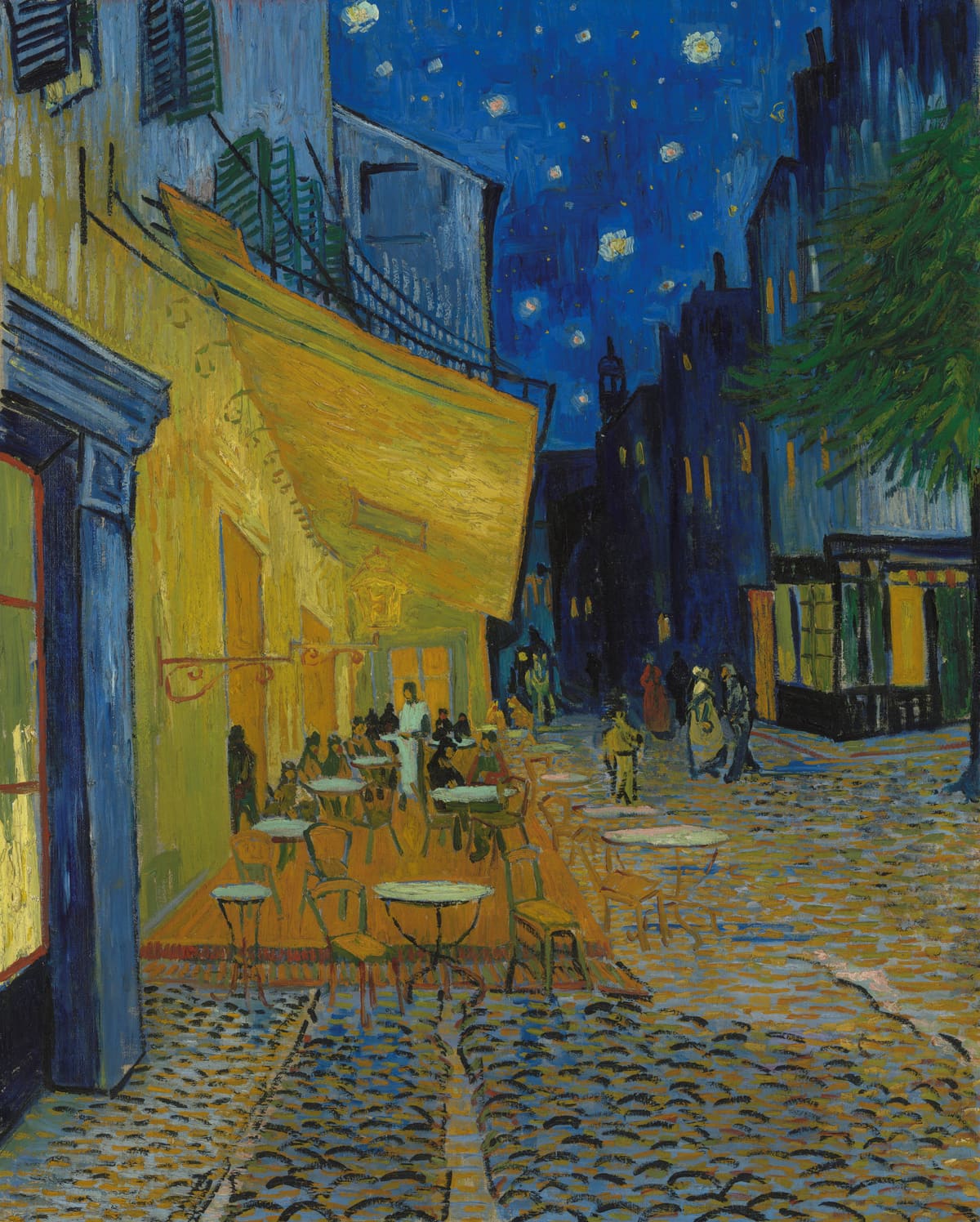
Café Terrace at Night
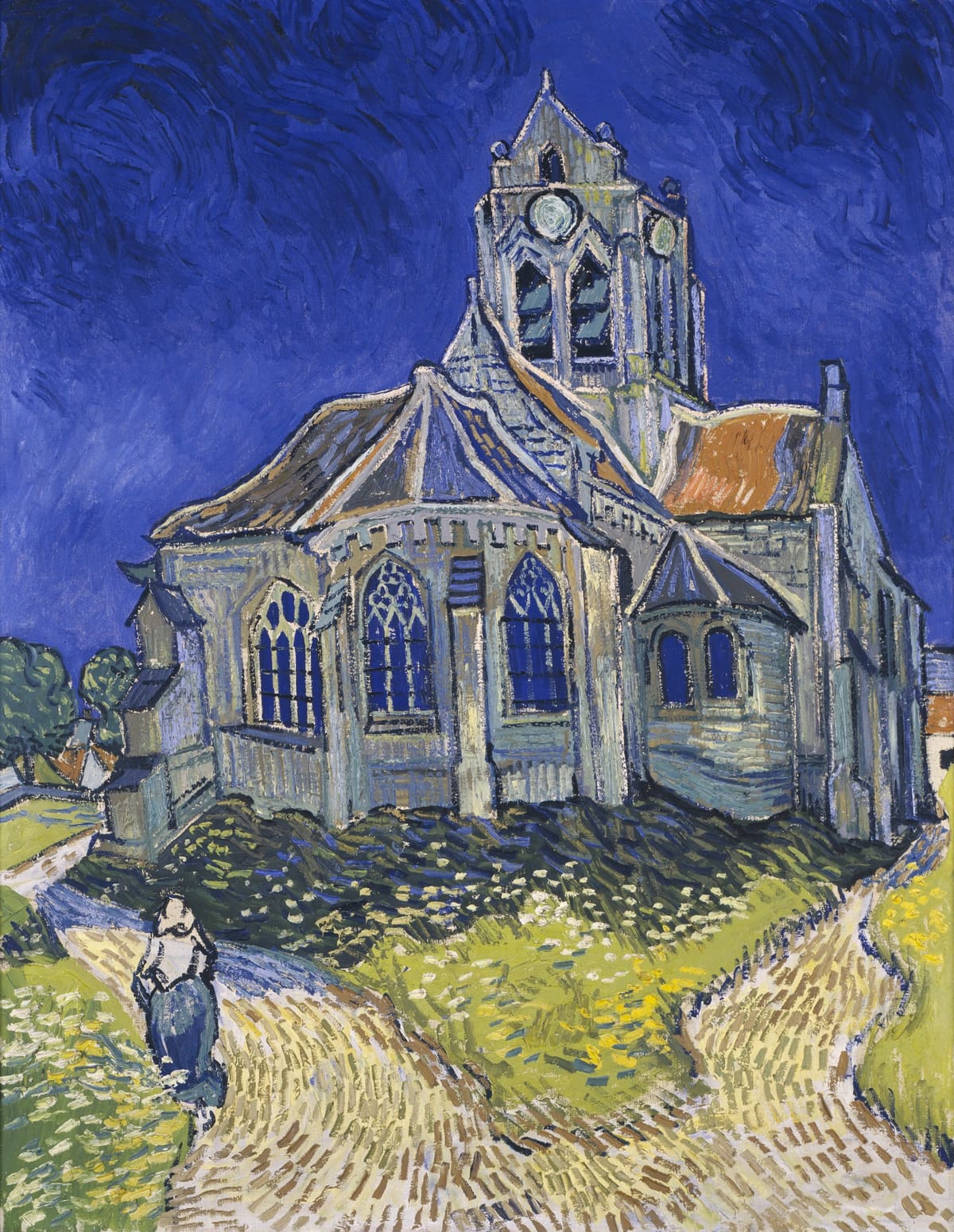
The Church at Auvers
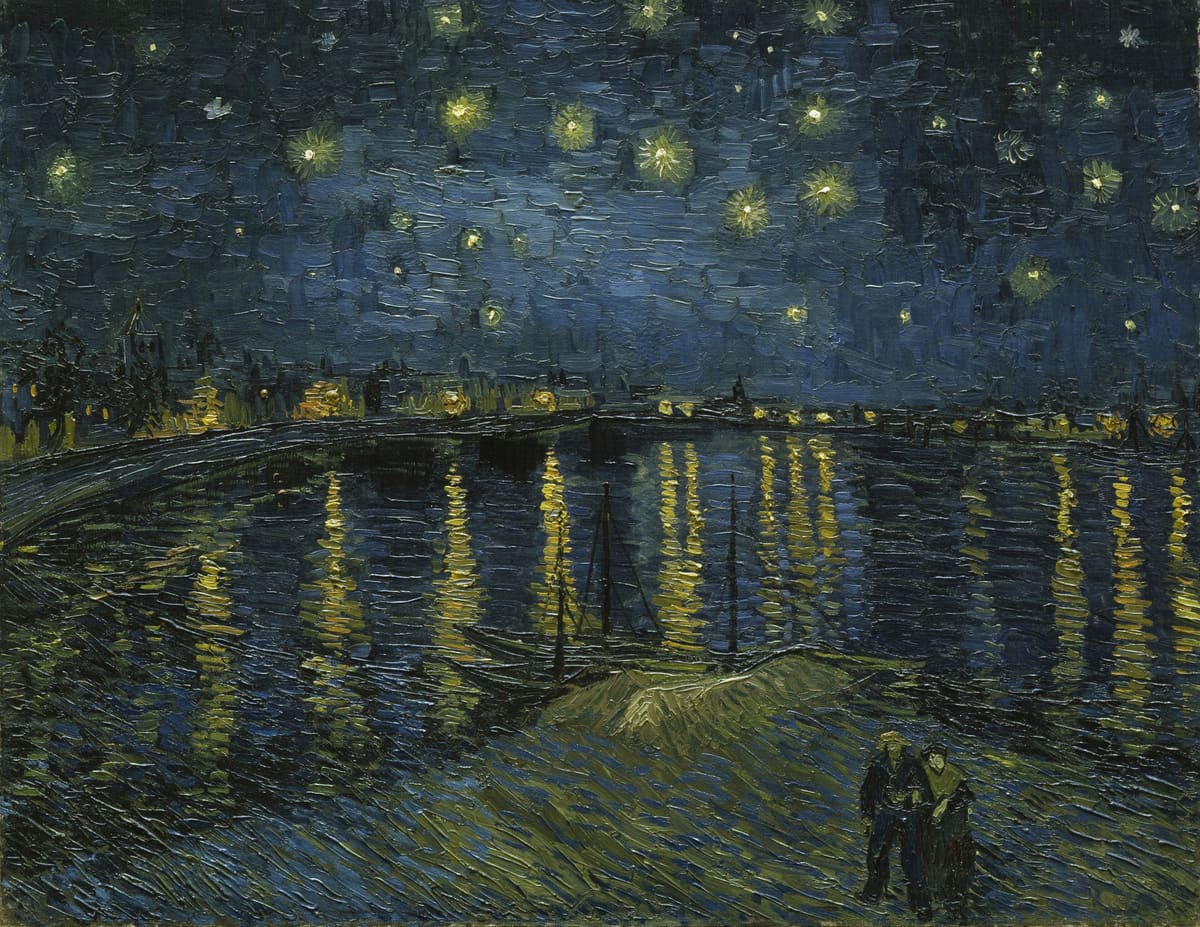
Starry Night Over the Rhone