The Doge's Palace Seen from San Giorgio Maggiore
The Doge's Palace and the Piazzetta of Venice across the water, seen from the island of San Giorgio Maggiore — the view is unchanged.
Doge's Palace
The painting shows a real, identified place that you can find today. The exact spot the artist worked from is not necessarily known.
The Doge's Palace Seen from San Giorgio Maggiore — at a glance
- Artist
- Claude Monet (1840–1926)
- Year
- 1908 (reworked to 1912)
- Movement
- Impressionism
- Place
- The Bacino di San Marco, Venice, Italy
- Viewpoint
- From San Giorgio Maggiore toward the Doge's Palace — the skyline is unchanged
- Medium
- Oil on canvas
- Now at
- Brooklyn Museum, New York, and other collections
Overview
This is one of the paintings Claude Monet made from his three-month stay in Venice in the autumn of 1908 — his only visit to the city, at the age of sixty-eight. It looks north across the Bacino di San Marco from the island of San Giorgio Maggiore towards the pink-and-white front of the Doge's Palace, with the domes and campanile of the city behind. It is oil on canvas. Monet painted the motif several times; a well-known version is in the Brooklyn Museum, New York.
The Venice paintings were finished from memory and study in Monet's studio at Giverny and shown in Paris in 1912.
The story behind the painting
Scholarship Monet went to Venice reluctantly, as a guest, and then found the light irresistible. He worked to a strict daily timetable, painting the same views — San Giorgio, the palace, the Grand Canal, the Salute — at the same hours each day. He brought the unfinished canvases home and reworked them over the following three years before exhibiting them.
Where was The Doge's Palace Seen from San Giorgio Maggiore painted?
Scholarship San Giorgio Maggiore is the island church directly across the water from the Piazzetta. From its steps and quay — and from the top of its campanile, now reached by lift — the whole front of Venice is laid out: the Doge's Palace, the two columns of the Piazzetta, the Library, the Campanile of San Marco and the domes beyond. The skyline is essentially unchanged, and Monet's framing can be matched almost exactly from the island today.
What is in the painting?
A wide band of lagoon water fills the foreground, worked in broken strokes of blue, green, pink and gold. Beyond it the Doge's Palace stretches across the canvas as a low pink mass, its arcades dissolved in light; the Campanile and domes rise behind. Mooring poles lean in the water. There is no incident — only the buildings, the water and the coloured air of a particular hour.
Look closely
The Doge's Palace
A low pink mass across the canvas, its arcades melted into light.
The Campanile and domes
The bell tower of San Marco and the city's domes rise behind the palace.
The mooring poles
Leaning posts in the water give the only near reference of scale.
The worked water
The whole foreground is short strokes of blue, green, pink and gold — reflection and moving light.
Analysis
Composition & perspective
A simple horizontal band of city between a large sky and a large sheet of water, seen straight on.
Scholarship Monet reduces one of the most painted views in art to three horizontal zones and lets colour carry it. The palace is centred and frontal; the mooring poles give the only near-scale; everything is subordinated to the light on the water.
Colour and light
Pink, mauve, blue and gold laid side by side, so the stone seems made of coloured mist.
Scholarship Working at fixed hours, Monet caught particular effects — hazy morning, low sun — and rendered them as veils of complementary colour. Solid Gothic architecture is dissolved into reflections and atmosphere; the picture is as much about Venetian light as about the palace.
History & provenance
Monet exhibited the Venice series at Bernheim-Jeune in Paris in 1912. Individual canvases are now in museums including the Brooklyn Museum, the National Museum Wales and private collections.
Sources
- Brooklyn Museum, New York — collection entry for Claude Monet, ‘The Doge's Palace Seen from San Giorgio Maggiore’ (1908)
- Philippe Piguet, ‘Monet et Venise’ — the 1908 campaign and 1912 exhibition
Frequently asked
Where did Monet paint this from?
From the island of San Giorgio Maggiore, across the Bacino di San Marco, looking towards the Doge's Palace and the Piazzetta of Venice.
Can you see the same view today?
Yes. The view from the steps and quay of San Giorgio — and from the top of its campanile, now reached by lift — is essentially unchanged, and Monet's framing can be matched almost exactly.
When did Monet paint the Venice pictures?
During a three-month stay in the autumn of 1908, his only visit to the city. He worked to a fixed daily timetable and finished the canvases in his studio at Giverny over the next three years.
Why do the buildings look so insubstantial?
Monet was painting particular effects of Venetian light and haze, laying pink, mauve, blue and gold side by side so that the solid Gothic stone seems made of coloured mist.
Where are these paintings now?
Spread across museums and private collections; a well-known version of this view is in the Brooklyn Museum, New York.
Related paintings

The Grand Canal
1908
Monet's other great Venice motif from the same 1908 campaign — the canal towards Santa Maria della Salute.

San Giorgio Maggiore at Dusk
1908
Monet looking back the other way, at the island itself, at sunset.

Impression, Sunrise
1872
Monet's harbour at Le Havre of 1872 — the first ‘impression’, the method the Venice pictures push to its limit.
More by Claude Monet
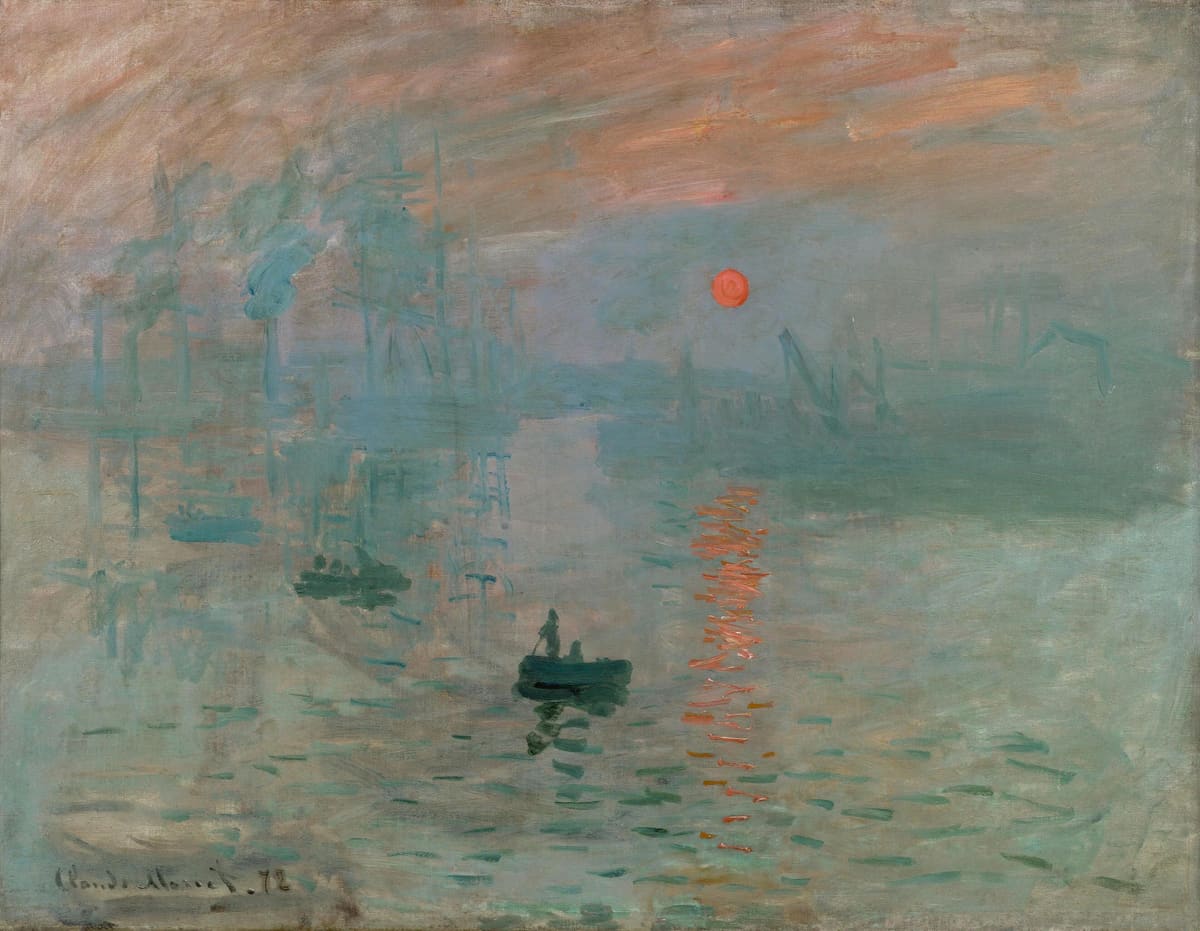
Impression, Sunrise
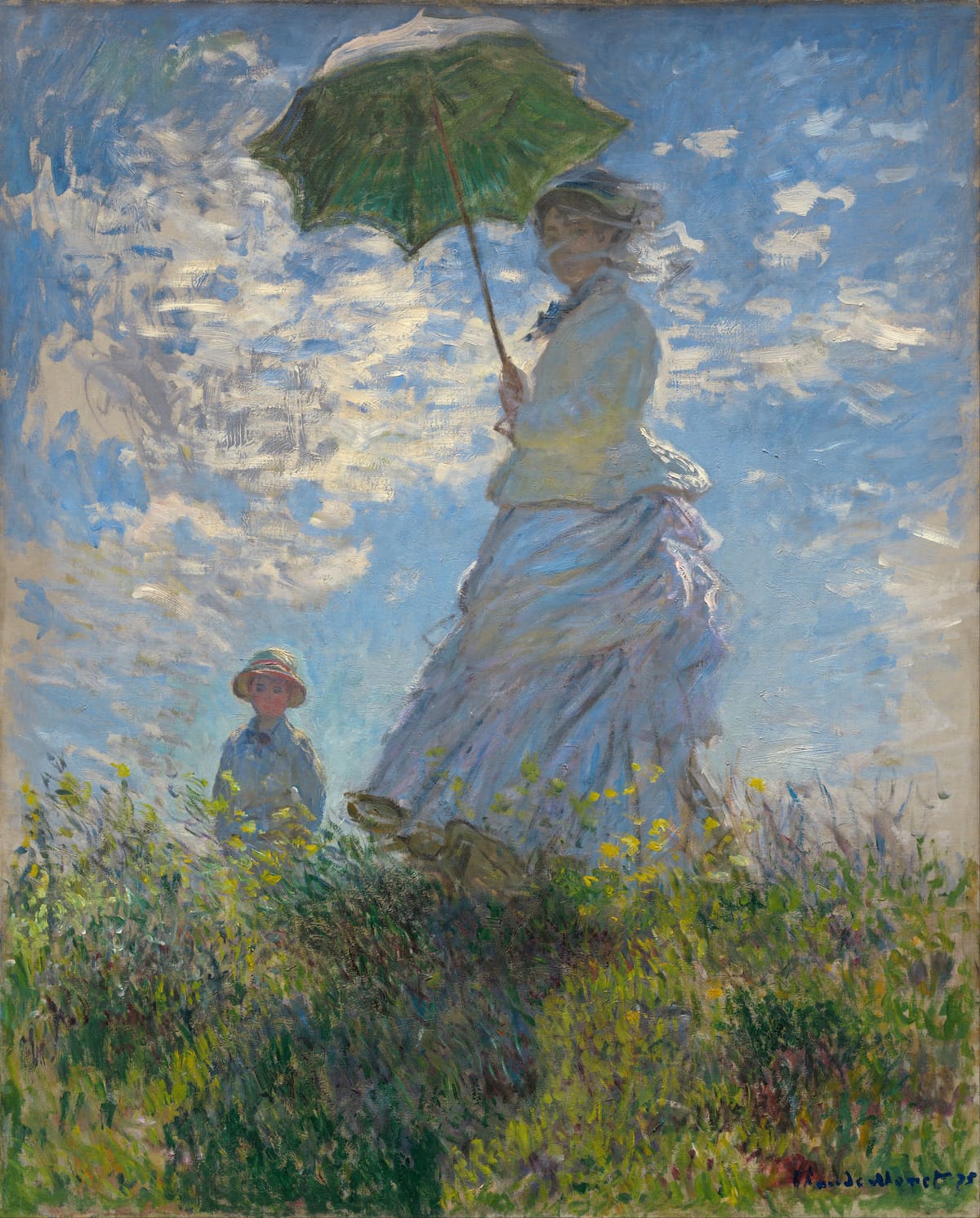
Woman with a Parasol – Madame Monet and Her Son

Houses on the Achterzaan