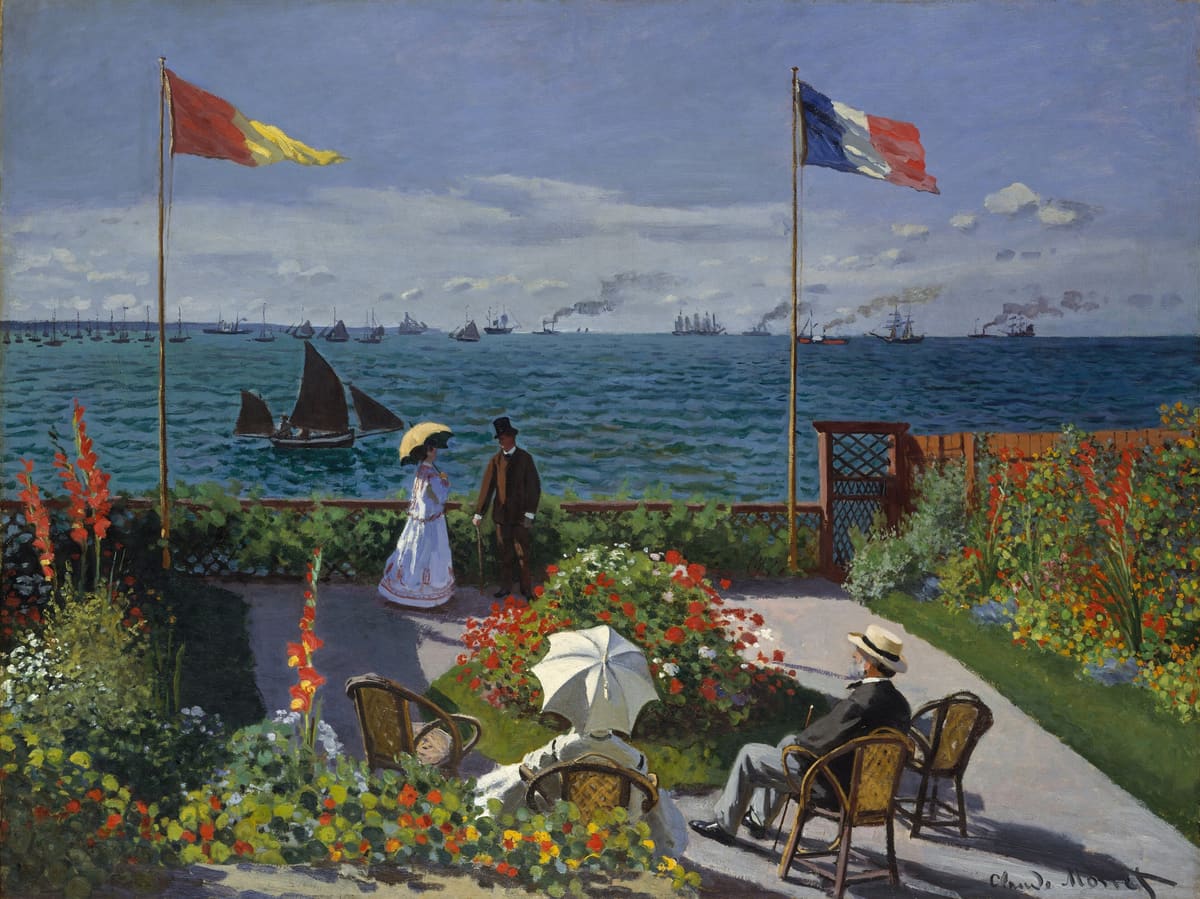
The Grand Canal
The Grand Canal in Venice looking to Santa Maria della Salute — the mooring posts, the water and the church all unchanged.
Santa Maria della Salute
The painting shows a real, identified place that you can find today. The exact spot the artist worked from is not necessarily known.
The Grand Canal — at a glance
- Artist
- Claude Monet (1840–1926)
- Year
- 1908 (reworked to 1912)
- Movement
- Impressionism (late)
- Place
- Grand Canal, Venice, Italy
- Viewpoint
- Down the canal toward Santa Maria della Salute — unchanged
- Medium
- Oil on canvas
- Dimensions
- c. 73 × 92 cm
- Now at
- Fine Arts Museums of San Francisco (and other collections)
Overview
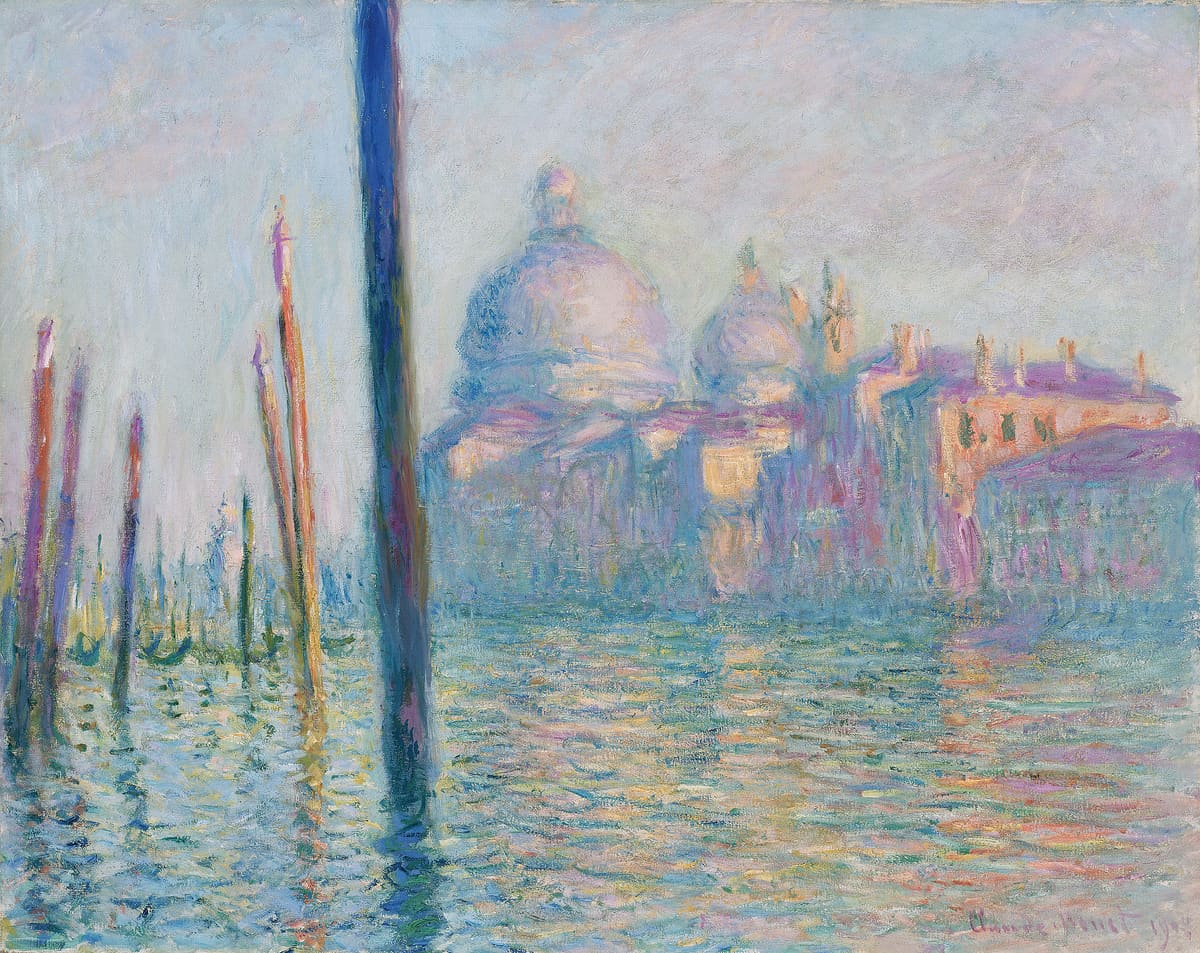
The Grand Canal is one of a group of paintings Claude Monet made in Venice in the autumn of 1908 — his only visit to the city, at the age of 68. It looks down the Grand Canal past a row of leaning mooring posts to the domed church of Santa Maria della Salute at the canal's mouth. It is oil on canvas; versions of the composition are in the Fine Arts Museums of San Francisco, the Museum of Fine Arts, Boston, and other collections.
How it was made
Monet went to Venice for about ten weeks in October–December 1908 with his second wife, Alice, staying first in the Palazzo Barbaro and then at a hotel. He had resisted painting the city — it seemed too well-worn a subject — but once there he began several series, working from balconies and the water at set times of day.
He brought the canvases home unfinished and reworked them in his studio at Giverny over the following years, showing the group in Paris in 1912.
Where was The Grand Canal painted?
The view is down the Grand Canal from the stretch near the Palazzo Barbaro, on the San Marco side, towards the Punta della Dogana and the church of Santa Maria della Salute — the great octagonal, domed church built as a thank-offering after a plague and finished in 1687.
Museum interpretation The Salute, the mooring posts (the striped ‘pali’ where gondolas and boats are tied) and this reach of the canal are all essentially unchanged; the framing can be matched closely from a boat or from the Barbaro side.
What is in the painting?
A row of tall wooden mooring posts, some striped, leans out of the water in the foreground and leads the eye down the canal. Beyond, the domed bulk of Santa Maria della Salute rises from the far bank, dissolved in a haze of blue, rose and gold.
There are almost no boats and no people; the subject is the water, the light and the silhouette of the church.
Look closely
The mooring posts
Tall striped ‘pali’ leaning out of the water — the poles Venetians tie their boats to along the palaces.
Santa Maria della Salute
The great domed church at the canal's mouth, built as a thank-offering after a 17th-century plague.
The empty canal
Almost no boats and no people — just a wide sheet of luminous water between the posts and the church.
Blurred reflections
The water is painted in the same colours as the buildings, so solid and reflection merge.
Details that are easy to miss. The mooring posts (‘pali’) are the striped poles used to tie up boats along Venetian palaces; the church is Santa Maria della Salute, a plague-votive built in the 17th century at the canal's mouth; there are almost no boats or figures anywhere in the picture; and the reflections in the water are painted in the same colours as the buildings, so the two blur together.
Analysis
Composition & perspective
A screen of near mooring posts, then a wide gap of water, then the distant church — three simple planes.
Scholarship Monet places the posts as a loose colonnade across the foreground, sets the Salute low on the far side, and fills the middle with empty, luminous water. The verticals of the posts play against the horizontal spread of the canal and the round of the dome. It is a spare, almost abstract arrangement.
Colour and light
Blue and rose water, a violet-gold church, everything half-melted in reflected Venetian light.
Scholarship Monet works the canal in broken strokes of blue, turquoise, pink and pale gold, with the church and posts rendered in the same range so that solid and reflection are hard to separate. The light is soft and pearly, an atmosphere rather than a source.
Handling and technique
Loose, layered brushwork built up in the studio over several years from work begun on the spot.
The Venice canvases were started rapidly in front of the motif and then reworked at Giverny well after Alice's death in 1911, which delayed the 1912 exhibition. The surfaces are dense and worked, closer to the late water-lily paintings than to Monet's crisp early work.
Meaning and interpretation
Interpretations differ. What the artist documented, what museums and scholars propose, and later or speculative theories are marked and kept separate.
Venice as pure atmosphere
The pictures are usually read as Monet's late project applied to a new place: not the tourist Venice of monuments, but the city as a field of coloured light on water, with the famous church reduced to a shape in the haze.
A late, elegiac group
Because Monet finished them in his studio in the years after his wife's death, some writers hear a valedictory note in the Venice series — a last, wistful engagement with a subject he had avoided for decades.
History & provenance
- Oct–Dec 1908Monet's only stay in Venice; the canvases begun on the spot.
- 1908–12Reworked in the studio at Giverny.
- 1912The Venice series shown at Bernheim-Jeune, Paris.
- 20th c.Versions dispersed to museums in the United States and Europe.
Monet painted this view more than once. Versions are held by the Fine Arts Museums of San Francisco, the Museum of Fine Arts in Boston and other collections; the Venice group as a whole is spread across many museums.
Sources
- Fine Arts Museums of San Francisco — collection entry for Monet's ‘The Grand Canal, Venice’
- Museum of Fine Arts, Boston — entry for its version of the composition
- Philippe Piguet, ‘Monet et Venise’ (1986); Bernheim-Jeune exhibition catalogue, Paris, 1912
Frequently asked
Where is the view in The Grand Canal?
Looking down the Grand Canal in Venice from near the Palazzo Barbaro, on the San Marco side, towards the domed church of Santa Maria della Salute at the canal's mouth.
Can you see the same view today?
Yes. The Salute, the striped mooring posts and this reach of the canal are essentially unchanged, and the framing can be matched from the water or the Barbaro side.
When did Monet paint it?
During his only stay in Venice, October to December 1908, when he was 68. He reworked the canvases in his studio at Giverny before showing the group in 1912.
Why are there no boats or people?
Monet was not painting the life of Venice but its light on water. He reduced the scene to the posts, the empty canal and the shape of the church in the haze.
Is there one Grand Canal painting?
No — Monet painted this view more than once, and the Venice series as a whole runs to dozens of canvases now spread across many museums.
Where can it be seen?
Versions are in the Fine Arts Museums of San Francisco, the Museum of Fine Arts in Boston and other collections.
Related paintings


More by Claude Monet
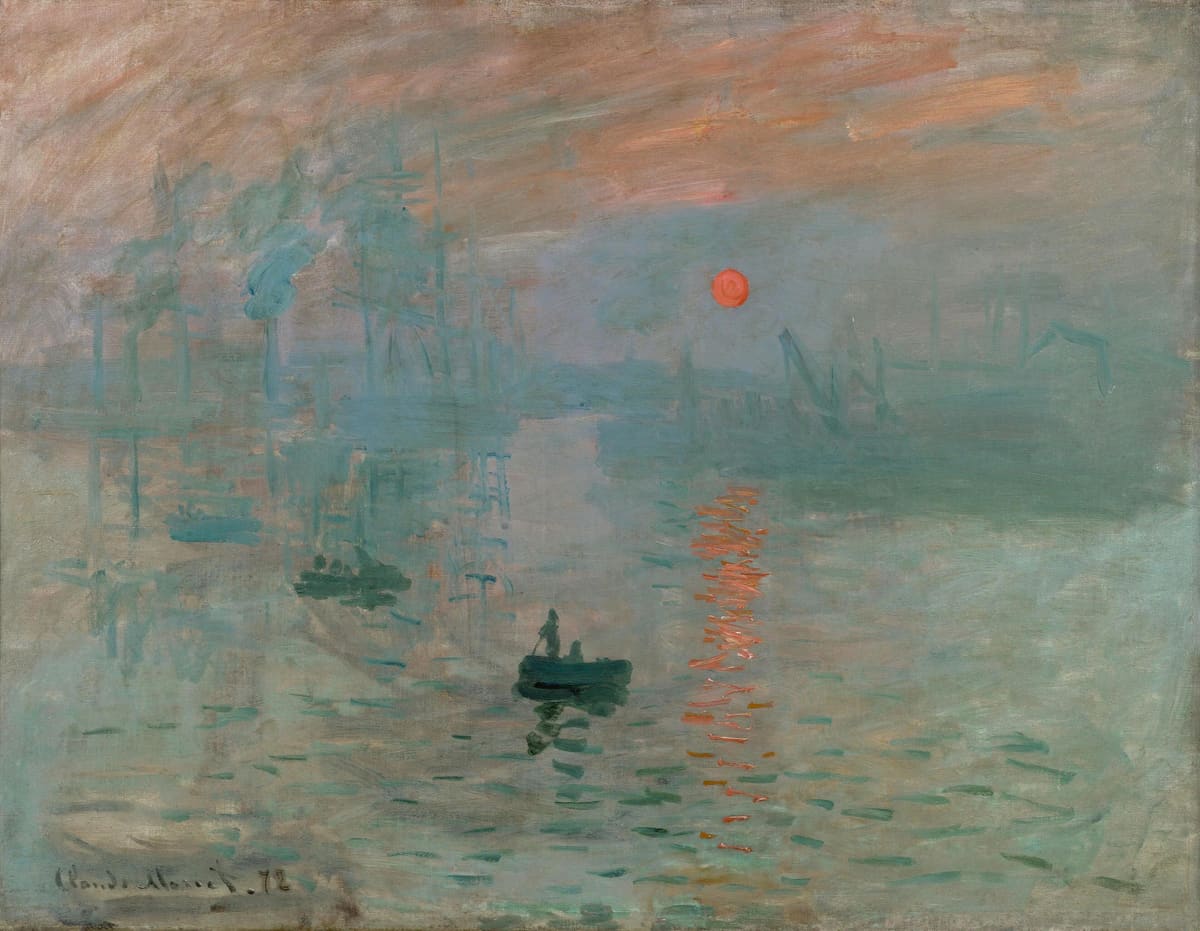
Impression, Sunrise
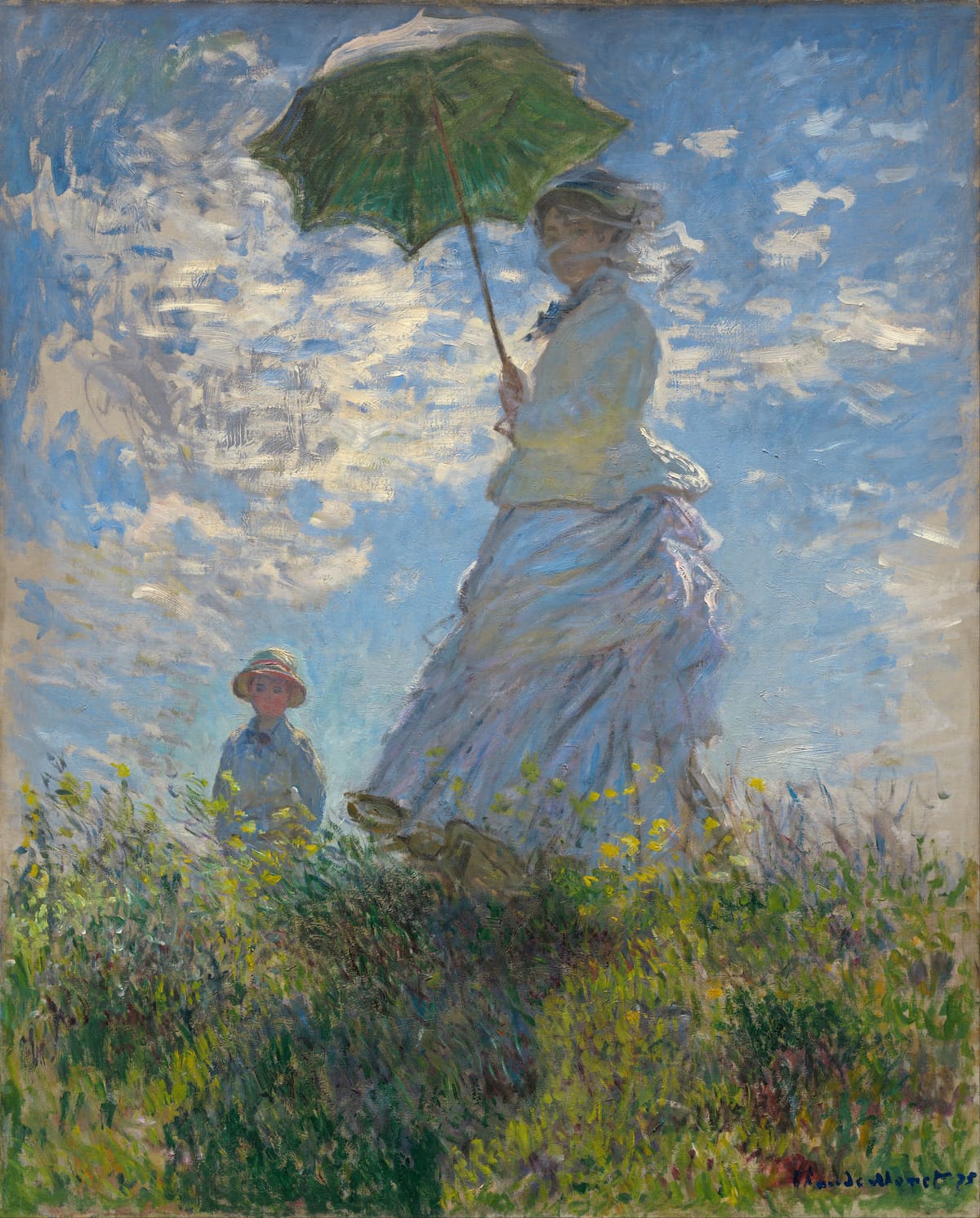
Woman with a Parasol – Madame Monet and Her Son

Houses on the Achterzaan