
The Beach at Sainte-Adresse
Fishing boats hauled up on the shingle at Sainte-Adresse, the working edge of Le Havre, under a grey sky.
Sainte-Adresse
The painting depicts a real landscape or cityscape. The precise viewpoint the artist used may be unknown, so the marker shows the general area.
The Beach at Sainte-Adresse — at a glance
- Artist
- Claude Monet (1840–1926)
- Year
- 1867
- Movement
- Impressionism (early)
- Place
- The beach at Sainte-Adresse, near Le Havre, Normandy
- Viewpoint
- The working fishing beach below the Cap de la Hève — beach and headland survive; town now a suburb
- Medium
- Oil on canvas
- Dimensions
- c. 76 × 102 cm
- Now at
- Art Institute of Chicago
Overview
The Beach at Sainte-Adresse is one of the group of pictures Claude Monet painted on his home coast in the summer of 1867. Unlike the bright regatta and garden scenes of the same weeks, it is a sober, grey-weather view: heavy fishing boats drawn up on a stony beach, nets and gear, a few working figures, the sea flat and pale, the cliffs of the Cap de la Hève behind. It is oil on canvas, about 76 by 102 cm, and it hangs in the Art Institute of Chicago.
Where was The Beach at Sainte-Adresse painted?
Museum interpretation Sainte-Adresse lies just west of the port of Le Havre, at the mouth of the Seine, below the chalk headland of the Cap de la Hève. In 1867 it was both a fishing village and a growing resort; Monet, who had grown up in Le Havre, spent the summer there with relatives. The beach, the seawall and the headland survive, though the town is now a Le Havre suburb; the picture records the working beach in dull weather rather than a marked viewpoint.
What is in the painting?
Broad-beamed fishing boats sit on the shingle in the foreground and middle distance, some with masts, one being tended by figures in dark clothes. Baskets, nets and an anchor lie on the stones. Beyond, a low grey-green sea, a couple of sails, and the pale cliff rising on the right under a flat, overcast sky.
Look closely
The beached fishing boats
Broad wooden hulls drawn up on the stones, some still masted, one being worked on by figures.
The gear on the shingle
Baskets, nets and an anchor lie among the pebbles in the foreground.
The Cap de la Hève
The pale chalk headland rises on the right under a flat grey sky.
Analysis
Composition and technique
Beached boats stepped back across a shingle foreground, the sea a thin pale band, the cliff at one side.
Scholarship Monet arranges the hulls on receding diagonals to lead the eye down the beach, keeps the horizon low and the sky plain, and paints the whole thing in a restrained range of greys and browns — a deliberate contrast to the sunlit pictures of the same summer.
History & provenance
The painting entered American collections and is in the Art Institute of Chicago.
Sources
- Art Institute of Chicago — collection entry for Claude Monet, ‘The Beach at Sainte-Adresse’ (1867; oil on canvas, c. 76 × 102 cm)
- House, John, ‘Monet: Nature into Art’ (Yale University Press, 1986)
Related paintings

Current display status
Currently on viewMore by Claude Monet
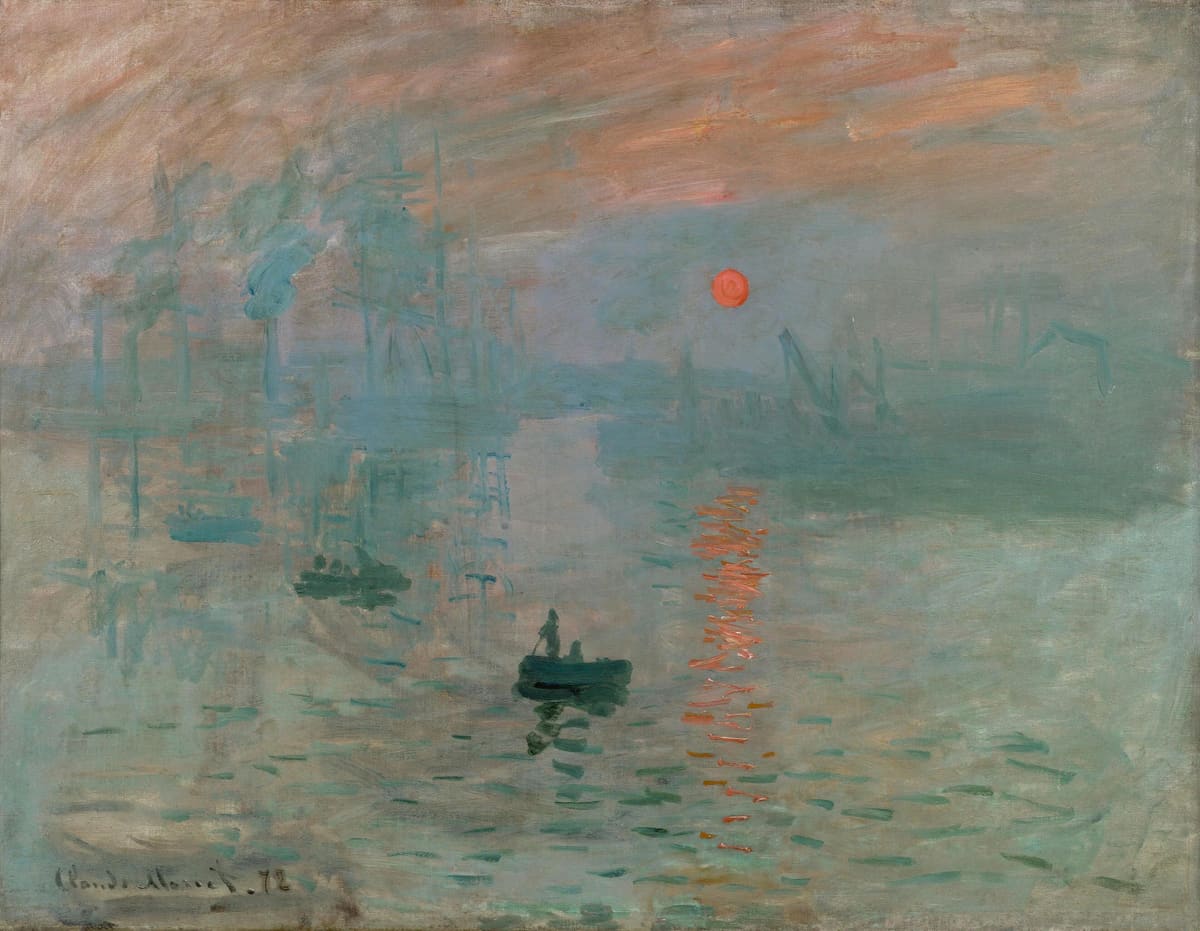
Impression, Sunrise
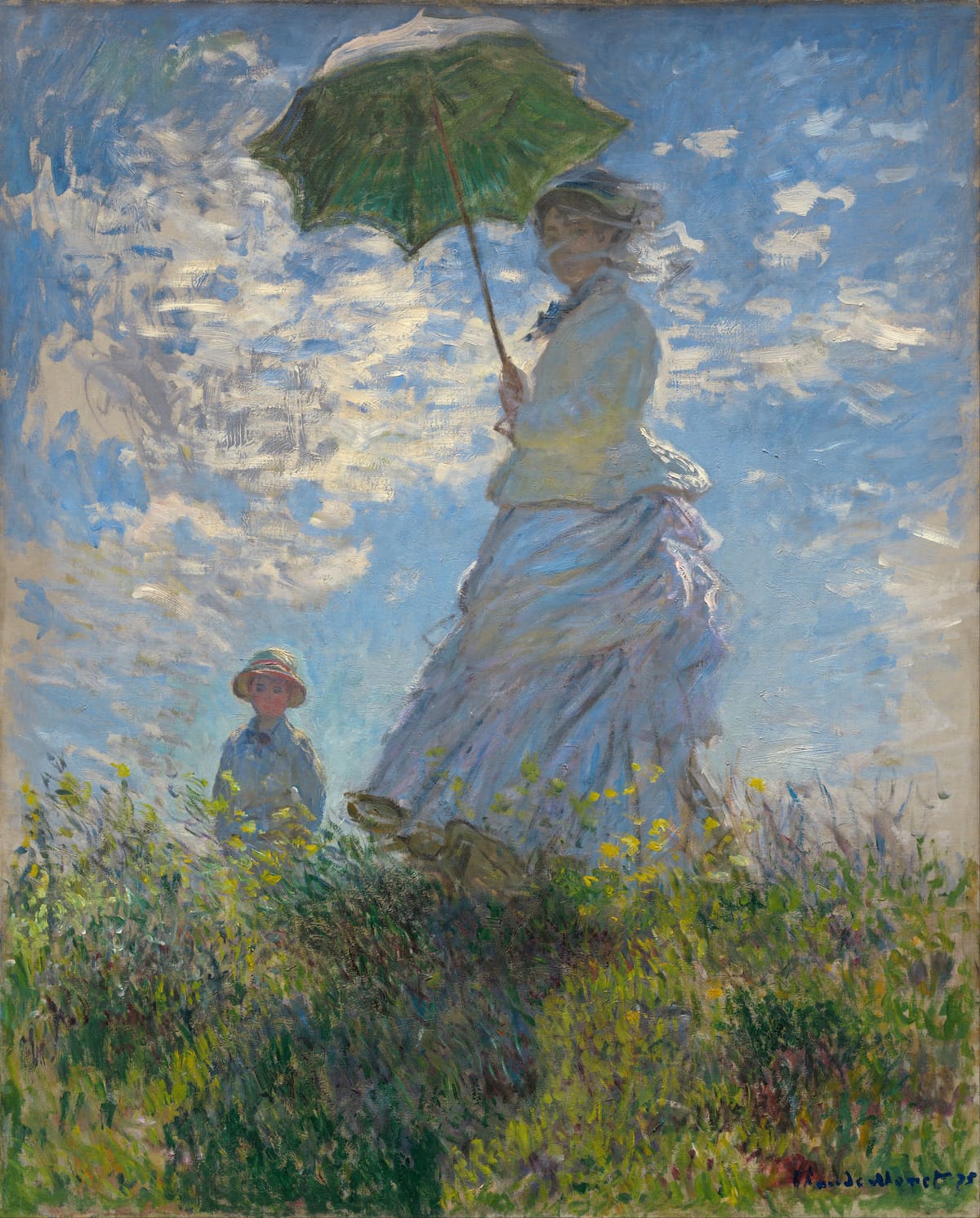
Woman with a Parasol – Madame Monet and Her Son

Houses on the Achterzaan
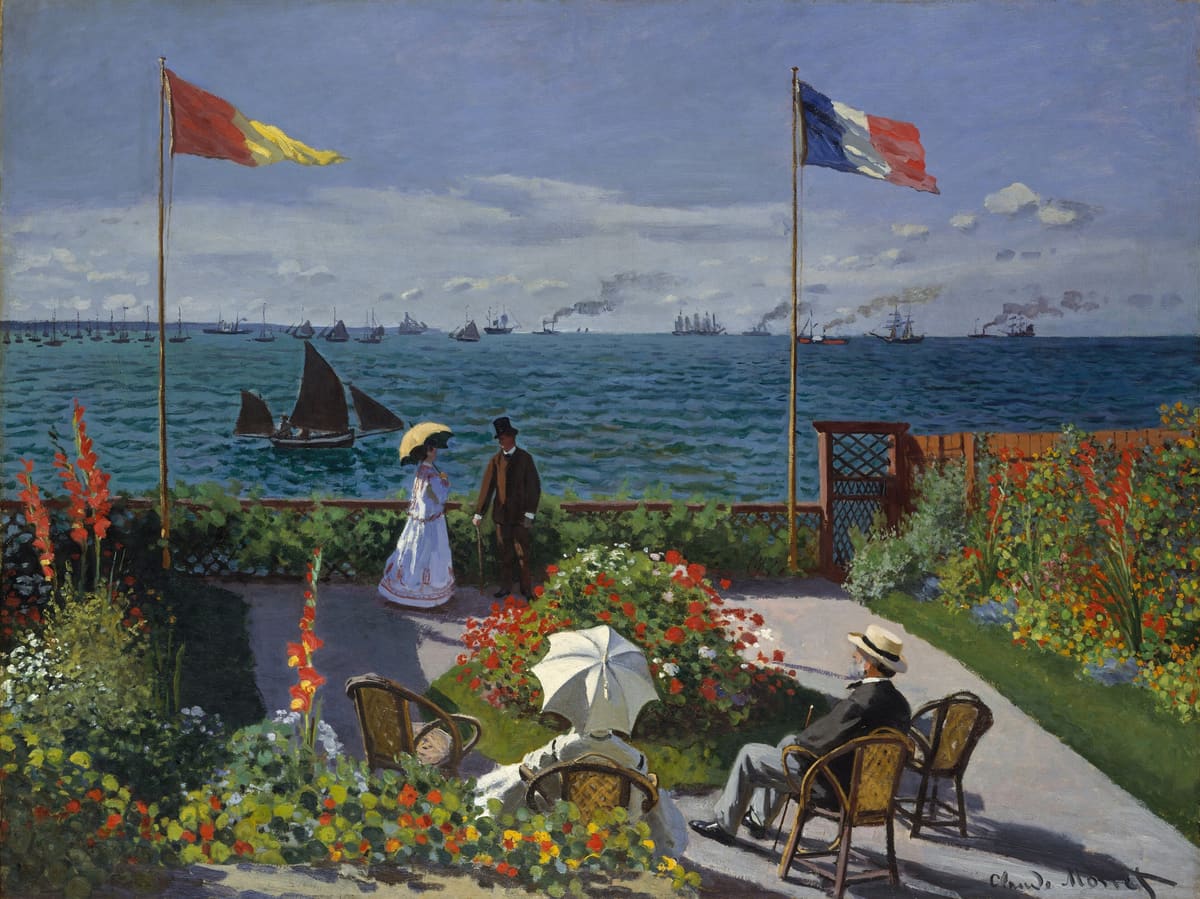
Also connected to Sainte-Adresse

