
Regatta at Sainte-Adresse
Sailing boats racing off the beach at Sainte-Adresse, the seaside edge of Le Havre — Monet's home coast.
Sainte-Adresse
The painting depicts a real landscape or cityscape. The precise viewpoint the artist used may be unknown, so the marker shows the general area.
Regatta at Sainte-Adresse — at a glance
- Artist
- Claude Monet (1840–1926)
- Year
- 1867
- Movement
- Impressionism (early)
- Place
- The beach at Sainte-Adresse, near Le Havre, Normandy
- Viewpoint
- The seafront below the Cap de la Hève — beach, jetty and headland survive; town now a suburb
- Medium
- Oil on canvas
- Dimensions
- c. 75 × 102 cm
- Now at
- Metropolitan Museum of Art, New York
Overview
Regatta at Sainte-Adresse is one of the pictures Claude Monet painted in the summer of 1867 on the Normandy coast where he had grown up. It shows a breezy day on the water: white-sailed yachts and dark-hulled fishing boats near a stone jetty, figures on the shingle beach in the foreground, and the cliffs of the Cap de la Hève closing the view. It is oil on canvas, about 75 by 102 cm, and it hangs in the Metropolitan Museum of Art, New York.
Where was Regatta at Sainte-Adresse painted?
Museum interpretation Sainte-Adresse is a small resort town immediately west of the port of Le Havre, below the chalk headland of the Cap de la Hève. Monet's family had connections there and he spent the summer of 1867 with his aunt, painting the beach, the regattas, the jetty and a garden terrace. The seafront, the beach, the jetty and the headland are still there; the town is now a Le Havre suburb, so the openness has gone, but the setting is recognisable.
What is in the painting?
In the foreground, the grey shingle beach with a few standing figures and a beached boat. Beyond, choppy blue-green water busy with sailing boats heeling in the wind, some racing, some working; a low stone jetty runs out from the left. The chalk cliffs of the Cap de la Hève rise pale on the right; a fresh sky of scudding cloud fills the top third.
Look closely
The heeling yachts
White-sailed boats lean into a stiff wind on the choppy water — a regatta in progress.
The stone jetty
A low jetty runs out from the left; it still marks the Sainte-Adresse seafront.
The Cap de la Hève
The pale chalk headland closes the view on the right.
The shingle beach
A plain grey pebble foreground with a beached boat and a few standing figures.
Analysis
Composition and technique
A high beach foreground, a busy band of water, and the headland as a firm shape at the right.
Scholarship Monet sets a plain shingle foreground against a lively middle band of boats and lets the jetty and the cliff frame the water. The brushwork is quick and directional — short strokes for the chop, longer ones for the sails and sky — an early Impressionist handling of a bright, windy marine.
Colour and light
Cool blues, greens and greys of a fresh Channel day, with white sails and warm notes on the beach.
The palette is brisk and marine — grey shingle, green-blue sea, white and cream sails, pale cliff — with a scatter of stronger colour in the figures and boat hulls. The light is clear and moving.
History & provenance
The painting entered American collections and was bequeathed to the Metropolitan Museum of Art, New York.
Sources
- The Metropolitan Museum of Art, New York — collection entry for Claude Monet, ‘Regatta at Sainte-Adresse’ (1867; oil on canvas, c. 75 × 102 cm)
- House, John, ‘Monet: Nature into Art’ (Yale University Press, 1986)
Related paintings

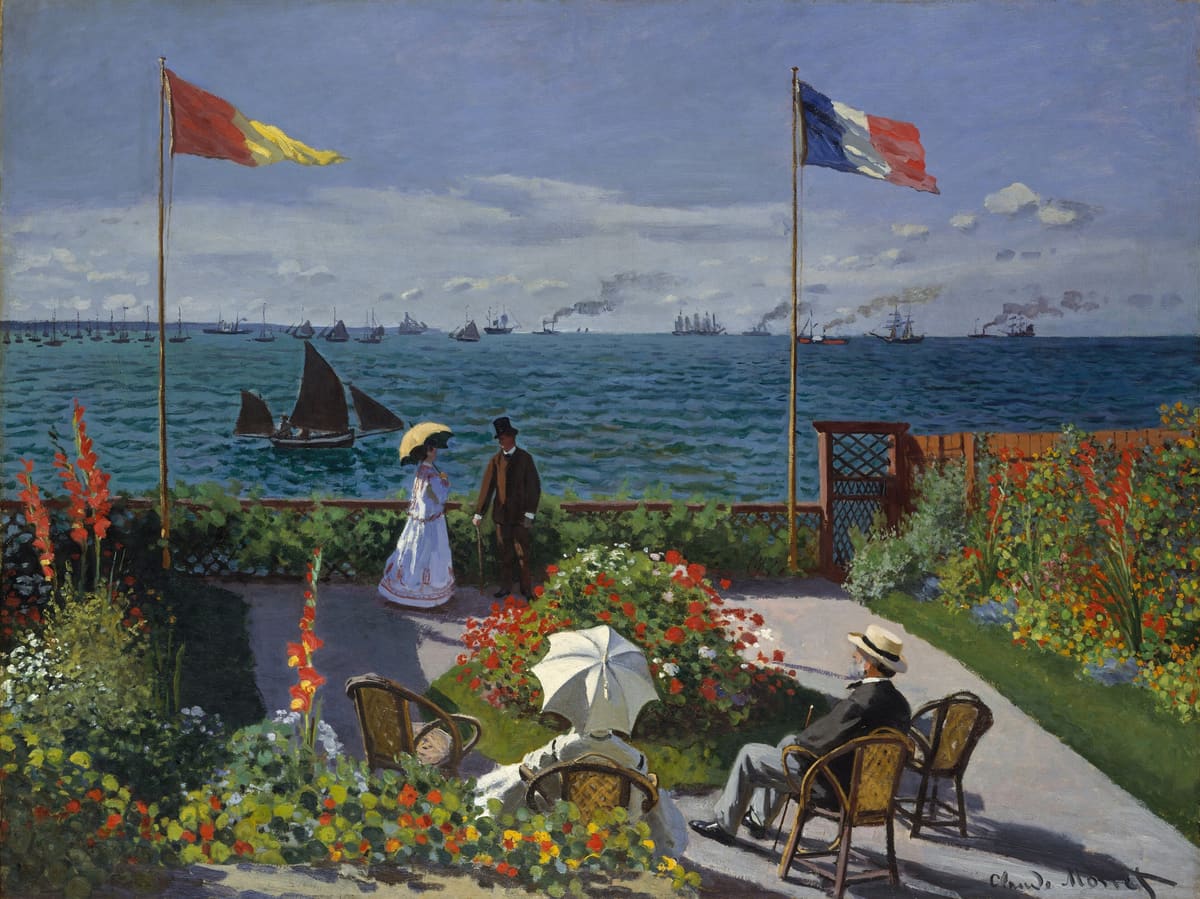
Garden at Sainte-Adresse
1867
Monet's brilliant terrace picture from the same 1867 summer, looking out over this same water.

Woman in the Garden
1867
Monet's figure in his aunt's Sainte-Adresse garden, also 1867.

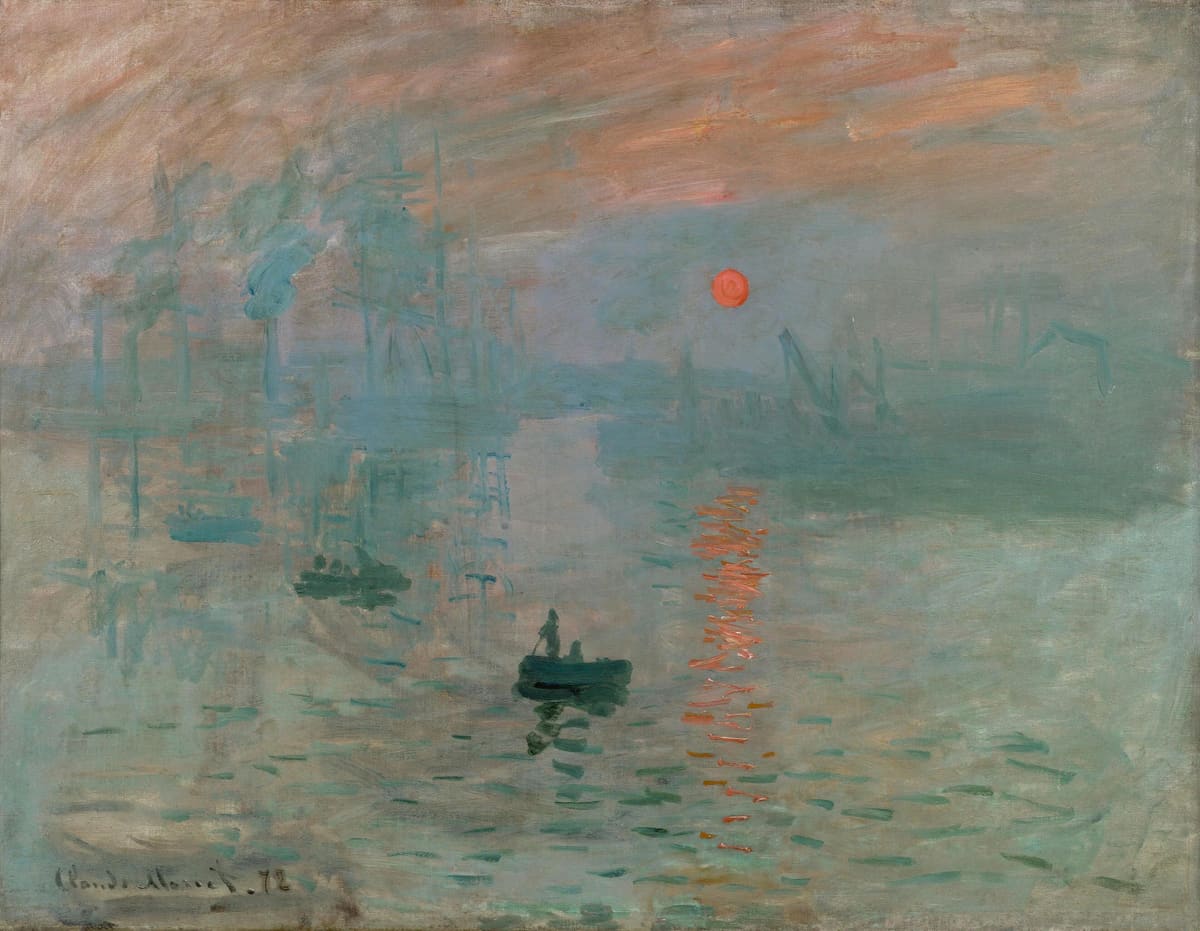
Impression, Sunrise
1872
Monet's Le Havre harbour of 1872 — the same stretch of coast, a few years on.
More by Claude Monet
Impression, Sunrise
Woman with a Parasol – Madame Monet and Her Son

Houses on the Achterzaan
Also connected to Sainte-Adresse
