
Snow at Argenteuil
A snowy street of Argenteuil in falling snow, muffled figures walking between garden walls and houses.
Argenteuil
The painting depicts a real landscape or cityscape. The precise viewpoint the artist used may be unknown, so the marker shows the general area.
Snow at Argenteuil — at a glance
- Artist
- Claude Monet (1840–1926)
- Year
- 1874–1875
- Movement
- Impressionism
- Place
- A residential street of Argenteuil, north-west of Paris
- Viewpoint
- An ordinary town street under snow — Argenteuil is now fully built up; a general viewpoint
- Medium
- Oil on canvas
- Now at
- Museum of Fine Arts, Boston, and other collections
Overview
Snow at Argenteuil is the title given to several closely related canvases Claude Monet painted in the winter of 1874–75, when heavy snow fell on the town of Argenteuil where he was living. They show a road or street of the town in dull, snow-filled light: figures with umbrellas or bundled against the cold walking between garden walls, fences and houses, snow lying thick on roofs and ground and still sifting down. They are oil on canvas; a large version is in the Museum of Fine Arts, Boston.
Where was Snow at Argenteuil painted?
Scholarship Argenteuil, about 10 km north-west of central Paris, was a small town on the Seine where Monet lived from 1871 to 1878 and painted the river, gardens, streets and railway. These snow scenes show its ordinary residential streets — the boulevard Saint-Denis area near his house — rather than the famous river. Argenteuil is now a dense inner suburb, entirely built up; the pictures record the modest 1870s town under snow, not a marked viewpoint.
What is in the painting?
A road runs back between low walls, wooden fences and houses with steep snow-covered roofs; leafless trees line it. Two or three dark figures, hunched or under umbrellas, walk the middle of the street. The sky is a heavy grey-white, the air full of snow, so distances blur; the whole picture is greys, blue-greys, off-whites and a few dark accents.
Look closely
The muffled figures
Two or three dark shapes, hunched or under umbrellas, walk down the middle of the street.
The snow-loaded roofs
Thick snow lies on the steep house roofs along the road.
The blurred distance
Falling snow greys out the far end of the street — a low-contrast light.
The bare trees
Leafless roadside trees mark the recession between the fences and walls.
Analysis
Composition and technique
A receding street between fences and houses, softened and greyed by falling snow, a few small figures for scale.
Scholarship Monet uses the line of the street and the trees to give depth, then blurs everything with the snow: quick flecked and dragged strokes for the fall, thin scumbles for the muffled distance. The figures are notated in a few dark touches. It is a study of a low-contrast, snow-filled light.
History & provenance
The Argenteuil snow scenes are spread across museums including the Museum of Fine Arts, Boston, the Courtauld Gallery, London, the Musée d'Orsay, Paris, and others.
Sources
- Museum of Fine Arts, Boston — collection entry for Claude Monet, ‘Snow at Argenteuil’ (c. 1874–75)
- Paul Hayes Tucker, ‘Monet at Argenteuil’ (Yale University Press, 1982)
Related paintings


More by Claude Monet
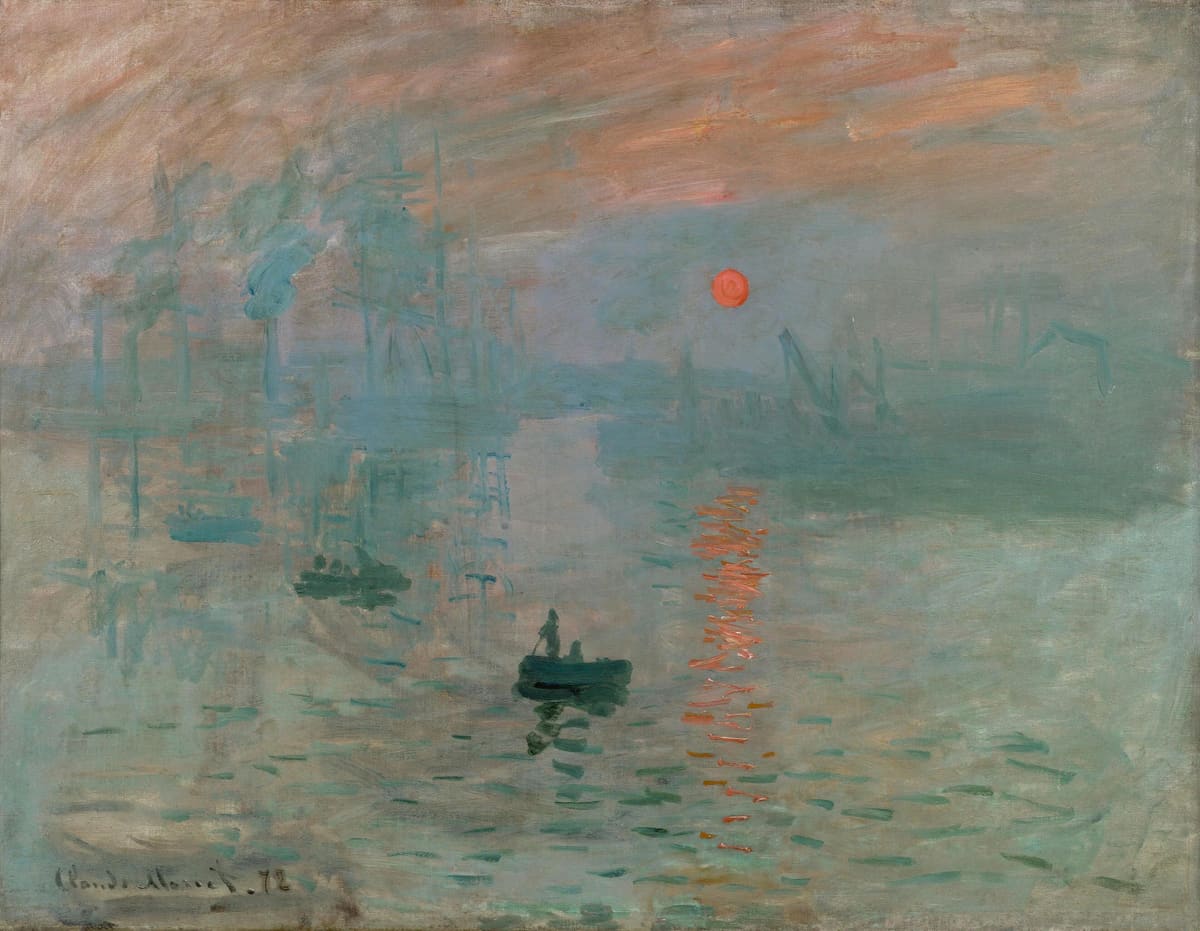
Impression, Sunrise
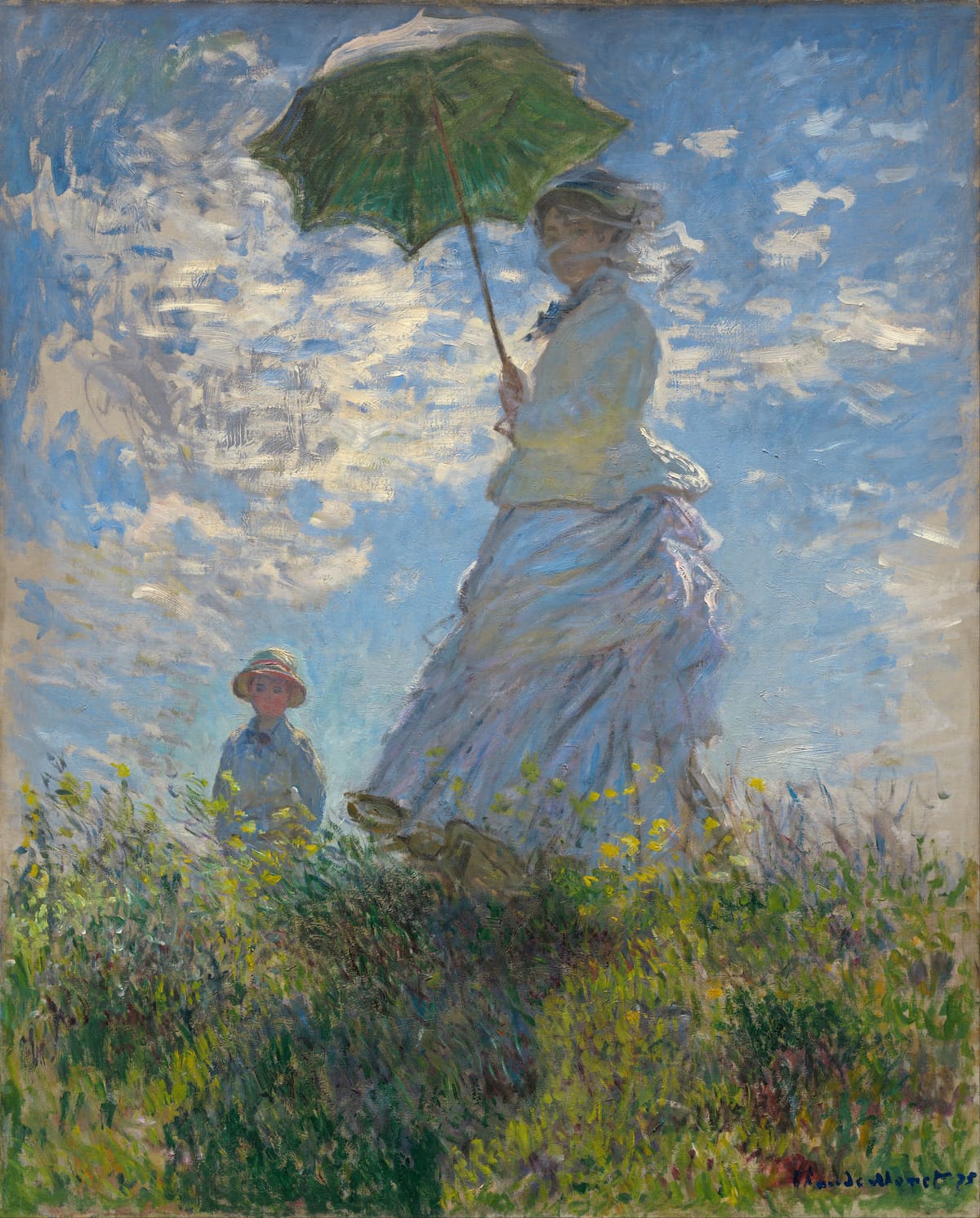
Woman with a Parasol – Madame Monet and Her Son

Houses on the Achterzaan
Also connected to Argenteuil
Woman with a Parasol – Madame Monet and Her Son


