Enclosed Field with Peasant
A walled wheatfield inside the grounds of the Saint-Rémy asylum, the blue wall of the Alpilles beyond.
Alpilles
The painting depicts a real landscape or cityscape. The precise viewpoint the artist used may be unknown, so the marker shows the general area.
Enclosed Field with Peasant — at a glance
- Artist
- Vincent van Gogh (1853–1890)
- Year
- 1889
- Movement
- Post-Impressionism
- Place
- The walled field of the Saint-Paul asylum, near Saint-Rémy-de-Provence
- Viewpoint
- From a barred window of Van Gogh's room over the walled field to the Alpilles — the site survives
- Medium
- Oil on canvas
- Dimensions
- c. 74 × 92 cm
- Now at
- Indianapolis Museum of Art (Newfields)
Overview
Enclosed Field with Peasant is one of many views Vincent van Gogh painted, from inside the Saint-Paul-de-Mausole asylum near Saint-Rémy, of the walled wheatfield he could see from a barred window of his room. Painted in late 1889, it shows the sloping field with a peasant working it, the enclosing wall, and the jagged blue-grey ridge of the Alpilles under a streaked sky. It is oil on canvas, about 74 by 92 cm, and it hangs in the Indianapolis Museum of Art (Newfields).
Where was Enclosed Field with Peasant painted?
Scholarship The Saint-Paul-de-Mausole asylum, in the Alpilles hills just south of Saint-Rémy-de-Provence, had a walled field within its grounds. Van Gogh described in letters painting it over and over from his window through the seasons. The site still functions as a clinic and is on a Van Gogh visitor route; the walled field and the view to the Alpilles survive and are matchable, and the barred window of his room can be seen.
What is in the painting?
The wheatfield fills the lower two-thirds, its rows sweeping in a curve up the slope, a small figure of a man working near the top. A low stone wall runs across, closing the field; beyond it, more land, then the broken blue line of the Alpilles. The sky is worked in horizontal streaks. The brushwork everywhere follows the lie of the furrows and the ridge.
Look closely
The curving furrows
The ploughed rows sweep up the slope in a curve that carries the eye to the wall.
The working figure
A small peasant works the field near the top, by the enclosing wall.
The wall
A low stone wall closes the field — the limit of what Van Gogh could see and reach.
The Alpilles
The broken blue-grey ridge of the hills lies as a firm horizontal beyond.
Analysis
Composition and technique
Curving furrows sweeping up to the enclosing wall, the mountains a firm horizontal beyond.
Scholarship Van Gogh uses the curve of the ploughed rows to carry the eye up the field to the wall and the working figure, then to the Alpilles. The confinement of the wall — the limit of what he could see and reach — is felt in the composition.
History & provenance
The painting is in the Indianapolis Museum of Art at Newfields (Samuel Josefowitz gift/loan history).
Sources
- Indianapolis Museum of Art at Newfields — collection entry for Vincent van Gogh, ‘Enclosed Field with Ploughman’ (1889)
- ‘Vincent van Gogh: The Letters’ (Van Gogh Museum) — Saint-Rémy, 1889
Related paintings

View of the Asylum and Chapel of Saint-Rémy
1889
The asylum buildings themselves, from the grounds, the same year.

Wheatfield with Crows
1890
Van Gogh's field at Auvers of July 1890 — the same sweeping furrows and troubled sky, further north.

The Angelus
1858
Millet's field workers — the peasant-in-the-field subject Van Gogh revered.
More by Vincent van Gogh
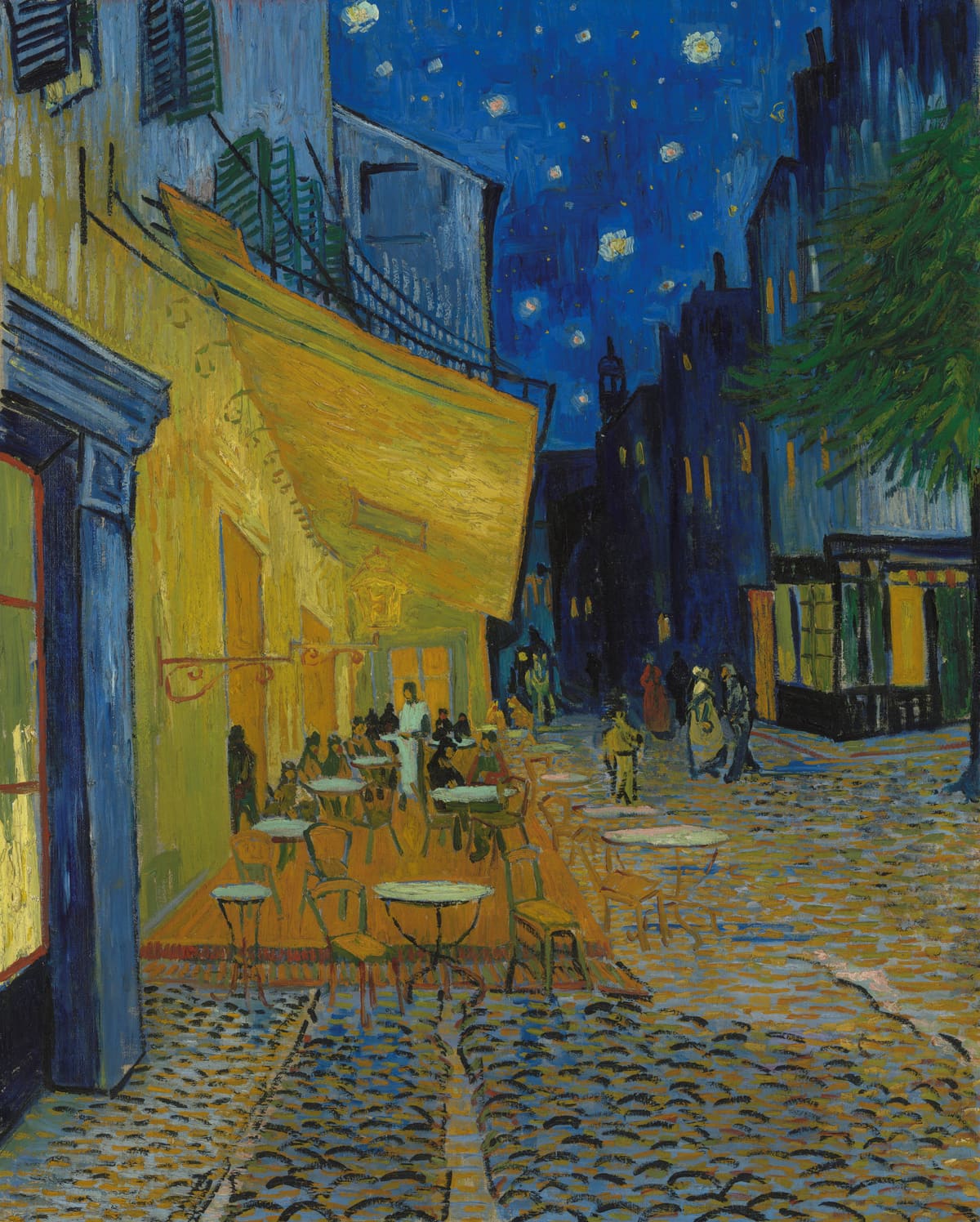
Café Terrace at Night
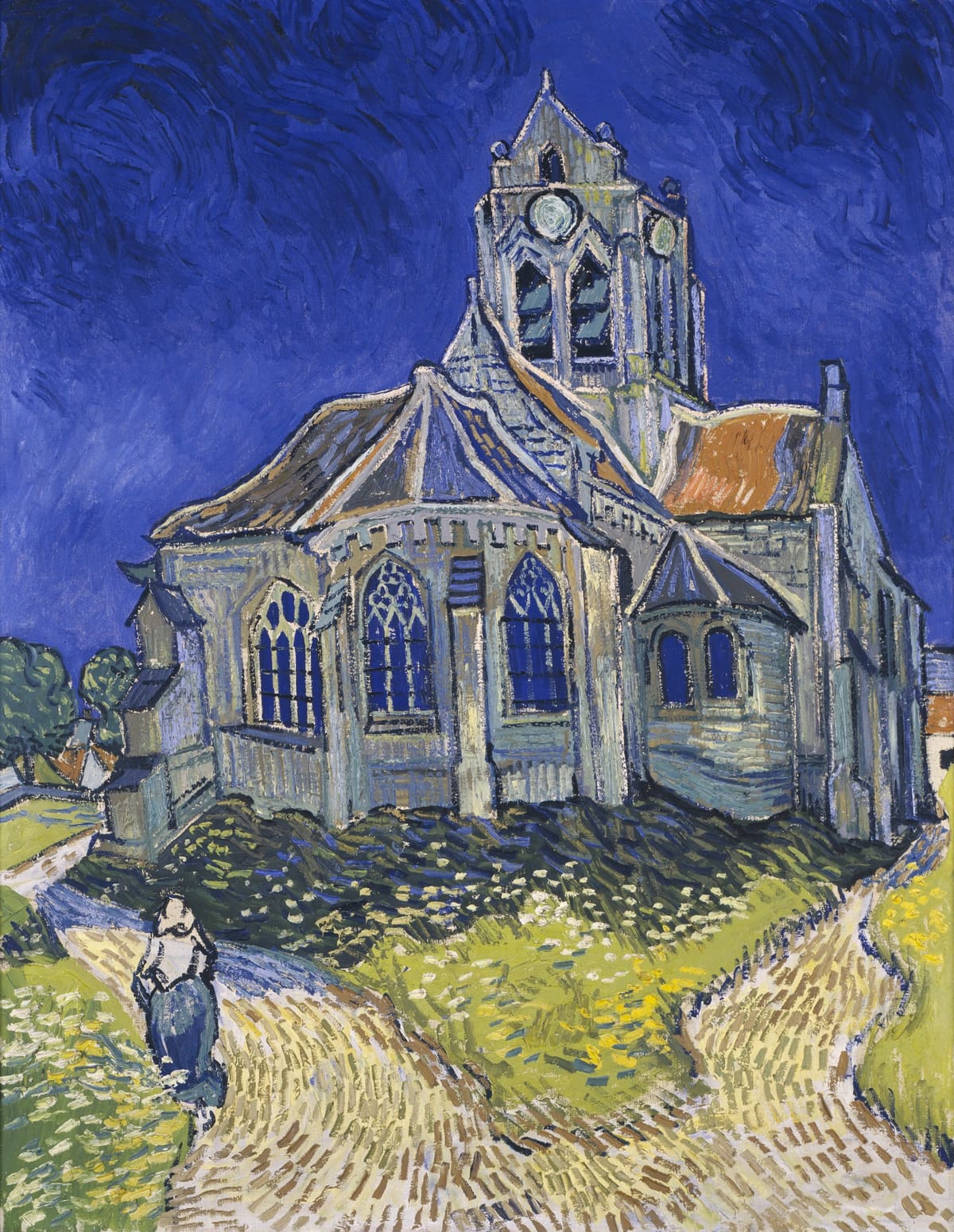
The Church at Auvers
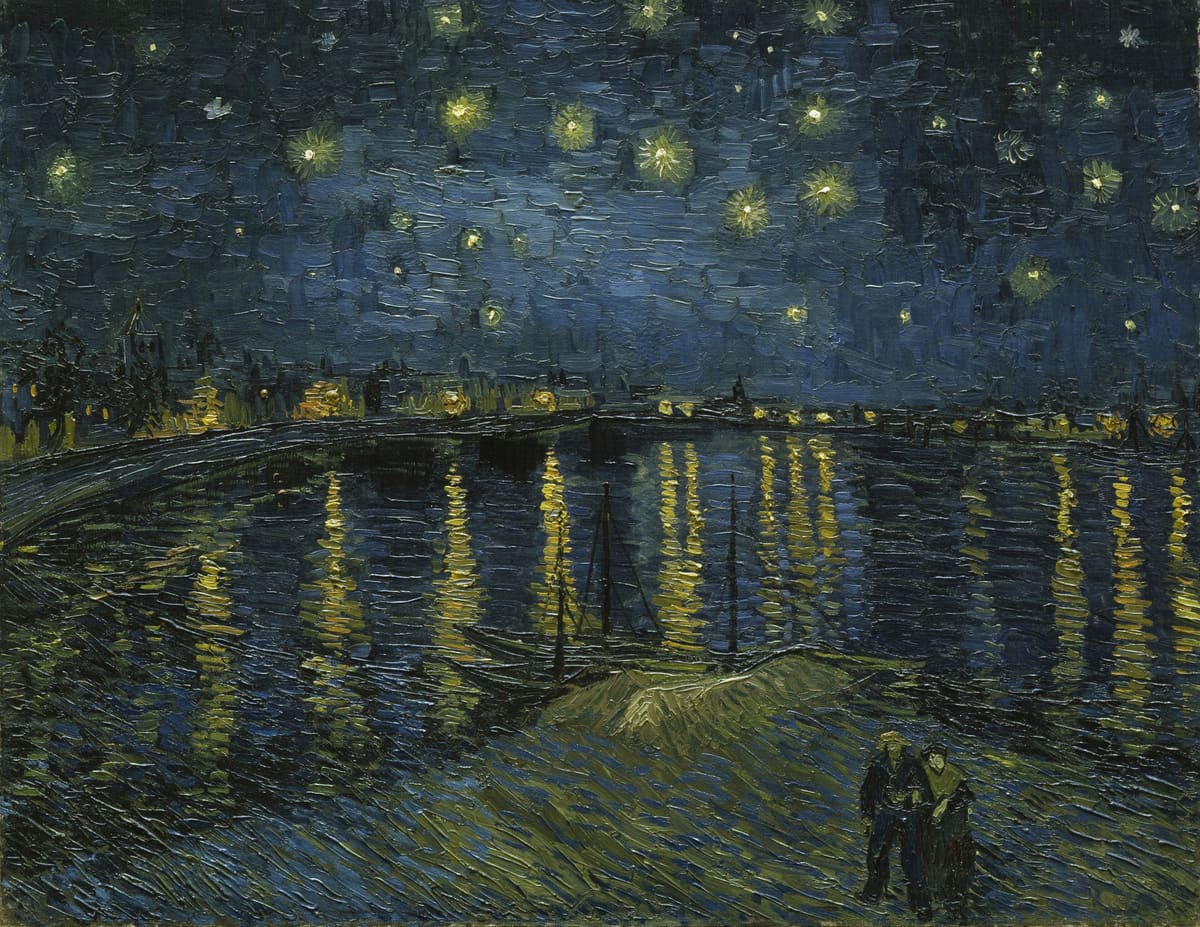
Starry Night Over the Rhone