Arrival of the Normandy Train, Gare Saint-Lazare
Under the glass roof of the Gare Saint-Lazare in Paris, steam filling the train shed — the station is still Paris's busiest.
Gare Saint-Lazare
The painting shows a real, identified place that you can find today. The exact spot the artist worked from is not necessarily known.
Arrival of the Normandy Train, Gare Saint-Lazare — at a glance
- Artist
- Claude Monet (1840–1926)
- Year
- 1877
- Movement
- Impressionism
- Place
- Gare Saint-Lazare, Paris 8e
- Viewpoint
- Inside the train shed under the glass roof — the sheds still stand and the station still operates
- Medium
- Oil on canvas
- Dimensions
- c. 60 × 80 cm
- Now at
- Art Institute of Chicago
Overview
This is the largest and best-known of the dozen paintings Claude Monet made in 1877 of the Gare Saint-Lazare in Paris. It shows a locomotive drawing into the train shed under the great pitched glass-and-iron roof, its steam billowing up and mixing with the smoke and the light. It is oil on canvas, about 60 by 80 cm, and it hangs in the Art Institute of Chicago.
Monet showed several of the Saint-Lazare paintings at the third Impressionist exhibition in 1877.
The story behind the series
Scholarship Monet, then living at Argenteuil on the Saint-Lazare line, got permission from the railway to set up his easel inside the station. He painted the shed, the platforms, the engines and the Pont de l'Europe beyond in different lights, treating the modern station as earlier painters had treated cathedrals and harbours.
Where was Arrival of the Normandy Train, Gare Saint-Lazare painted?
Museum interpretation The Gare Saint-Lazare, in the eighth arrondissement, is the Paris terminus for lines to Normandy and the western suburbs, and remains the busiest station in France by passenger numbers. The great iron-and-glass train sheds Monet painted still cover the platforms, and the Pont de l'Europe still crosses the throat of the station just beyond, though rebuilt. The scene can be broadly matched from the platform ends.
What is in the painting?
A dark locomotive stands at the centre, front-on, under a plume of blue-grey steam that rises to the roof and catches the light. The triangular glass roof spans the top of the canvas, its ironwork drawn in loose strokes. Platforms, small figures of waiting passengers and railway staff, and the pale buildings and the Pont de l'Europe show dimly through the vapour on either side.
Look closely
The plume of steam
Blue-grey vapour rises from the engine to the roof and catches the light — the picture's real subject.
The glass roof
The triangular iron-and-glass gable spans the top of the canvas, drawn in loose strokes.
The locomotive
A dark engine stands front-on at the centre, almost swallowed by its own steam.
The dim figures
Waiting passengers and railway staff are glimpsed on the platforms through the haze.
The Pont de l'Europe
The iron road bridge shows faintly beyond the shed — the same bridge Caillebotte painted the year before.
Analysis
Composition & perspective
The iron roof makes a symmetrical triangular frame; the engine and its steam fill the space it encloses.
Scholarship Monet centres the locomotive and lets the gable of the roof and the receding platforms form a near-symmetrical funnel around it. The real subject is the steam — a shifting, half-transparent mass through which the hard architecture and the figures are only glimpsed.
Colour and light
Blue-greys and slate tones lit from above, with the steam taking colour from the sky through the glass.
The palette is cool and smoky — grey, blue, violet, with warmer browns in the engine and the ground. Light falls through the glass roof and is broken up by the vapour, so edges dissolve and the whole shed seems to be seen through moving air.
Meaning and interpretation
Interpretations differ. What the artist documented, what museums and scholars propose, and later or speculative theories are marked and kept separate.
The station as modern monument
The series is read as Monet's claim that the railway station — iron, glass, steam, crowds — was a subject as worthy of sustained painting as any older landmark, and a natural one for a painter interested in atmosphere.
A step towards the later series
Painting the same place repeatedly in changing light and vapour anticipates Monet's later series of haystacks, poplars and Rouen Cathedral.
History & provenance
The painting entered American collections and was given to the Art Institute of Chicago, where it hangs among the museum's strong group of Impressionist works.
Sources
- Art Institute of Chicago — collection entry for Claude Monet, ‘Arrival of the Normandy Train, Gare Saint-Lazare’ (1877; oil on canvas, c. 60 × 80 cm)
- Juliet Wilson-Bareau, ‘Manet, Monet, and the Gare Saint-Lazare’ (National Gallery of Art, Washington, 1998)
Frequently asked
Where is this painted?
Inside the Gare Saint-Lazare in Paris, under the pitched iron-and-glass roof of the train shed, looking at a locomotive drawing in.
Does the station still exist?
Yes. The Gare Saint-Lazare is still in use and is the busiest station in France by passenger numbers. The iron-and-glass sheds still cover the platforms; the Pont de l'Europe beyond has been rebuilt.
Why did Monet paint the station so many times?
He lived on the line at Argenteuil, got the railway's permission to work inside, and painted about a dozen views of the shed, engines and platforms in different light — treating the modern station like a cathedral.
What is the real subject?
The steam. The locomotive and the ironwork are half-hidden in a shifting cloud of vapour lit from above through the glass roof.
Where is the painting now?
In the Art Institute of Chicago.
Related paintings

Le Pont de l'Europe
1876
Caillebotte's bridge of 1876 — the iron span that crosses the throat of this station, seen from above.

Rain, Steam and Speed – The Great Western Railway
1843
Turner's railway of 1844 — the earlier great painting of a train as weather and light.

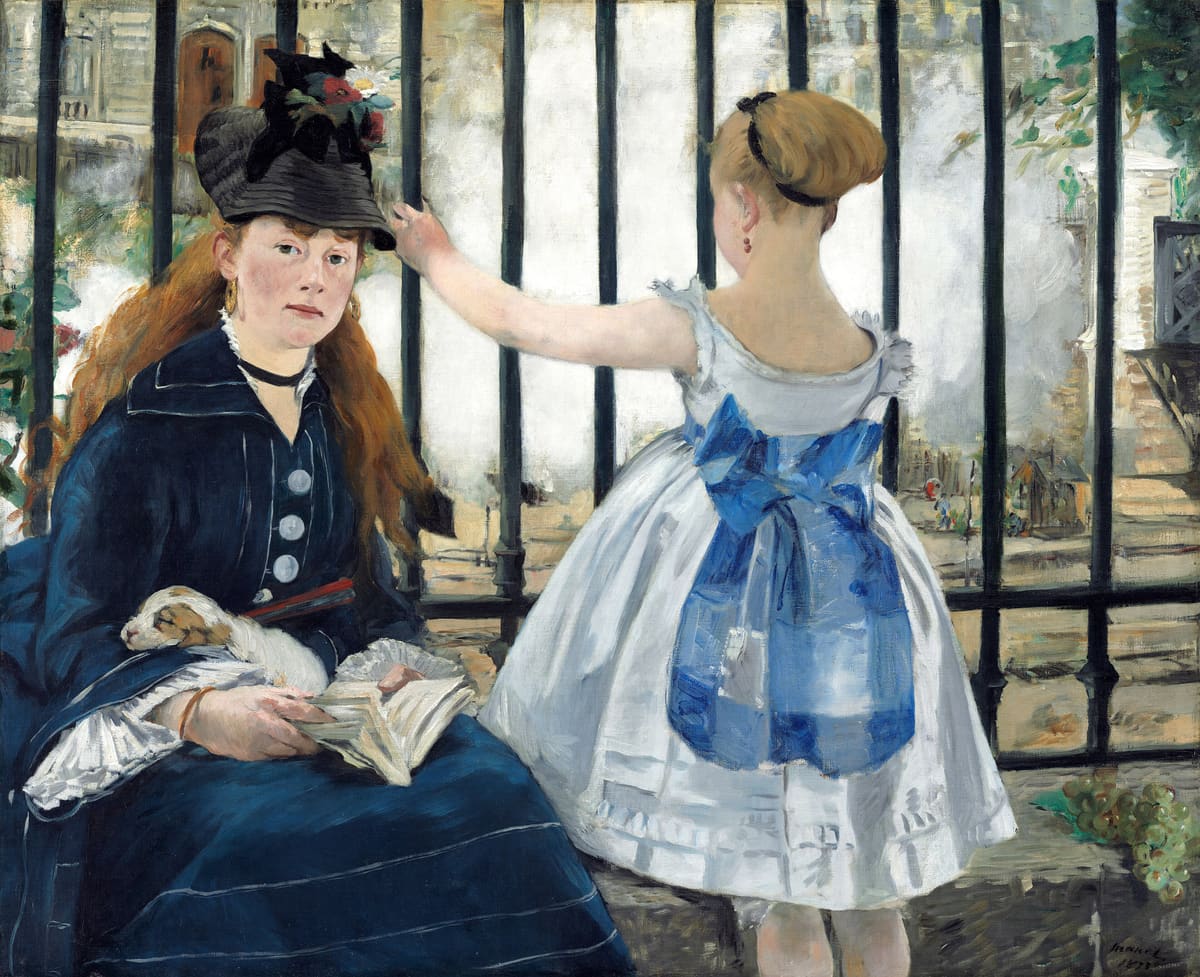
The Railway
1873
Manet outside the same station in 1873 — the wall and the steam beyond the railings.
Current display status
Currently on loanMore by Claude Monet
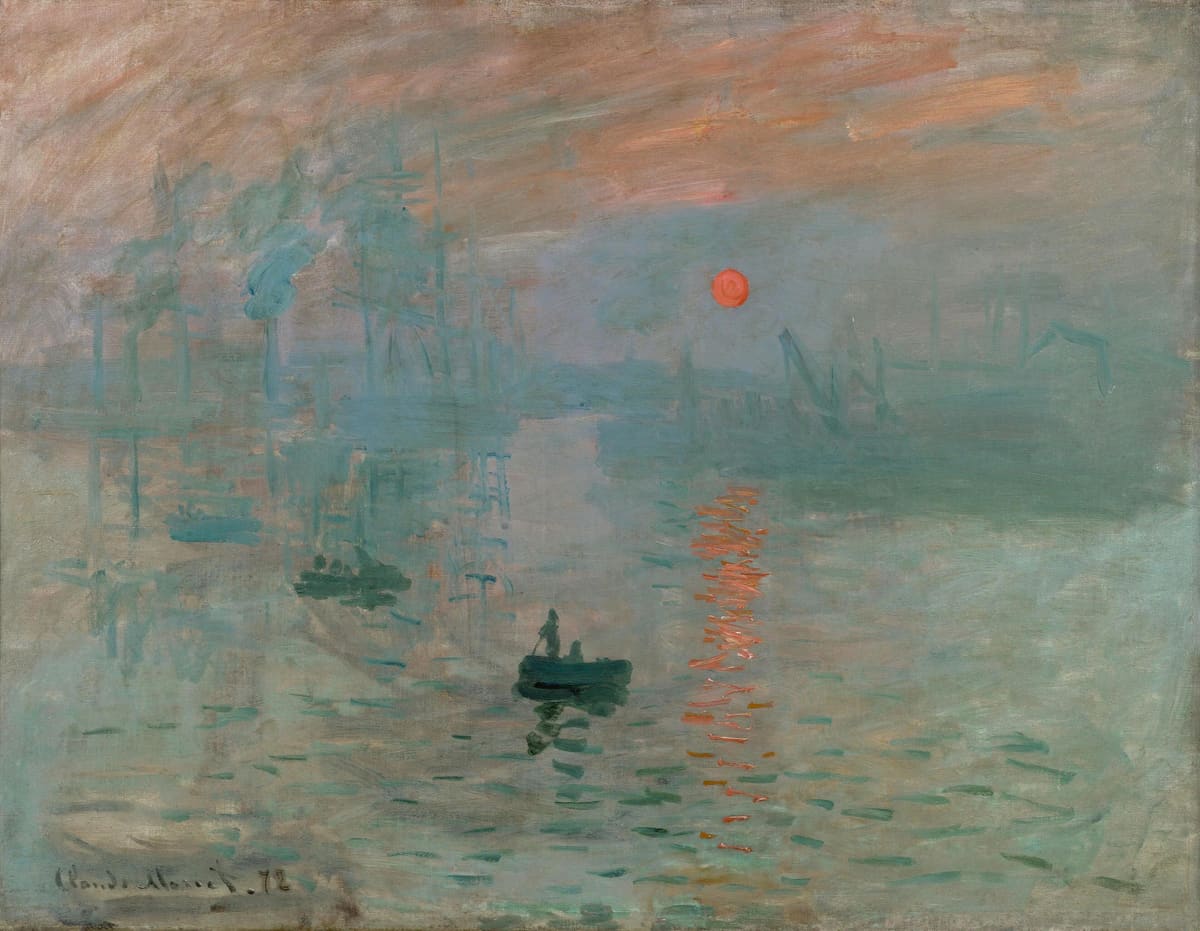
Impression, Sunrise
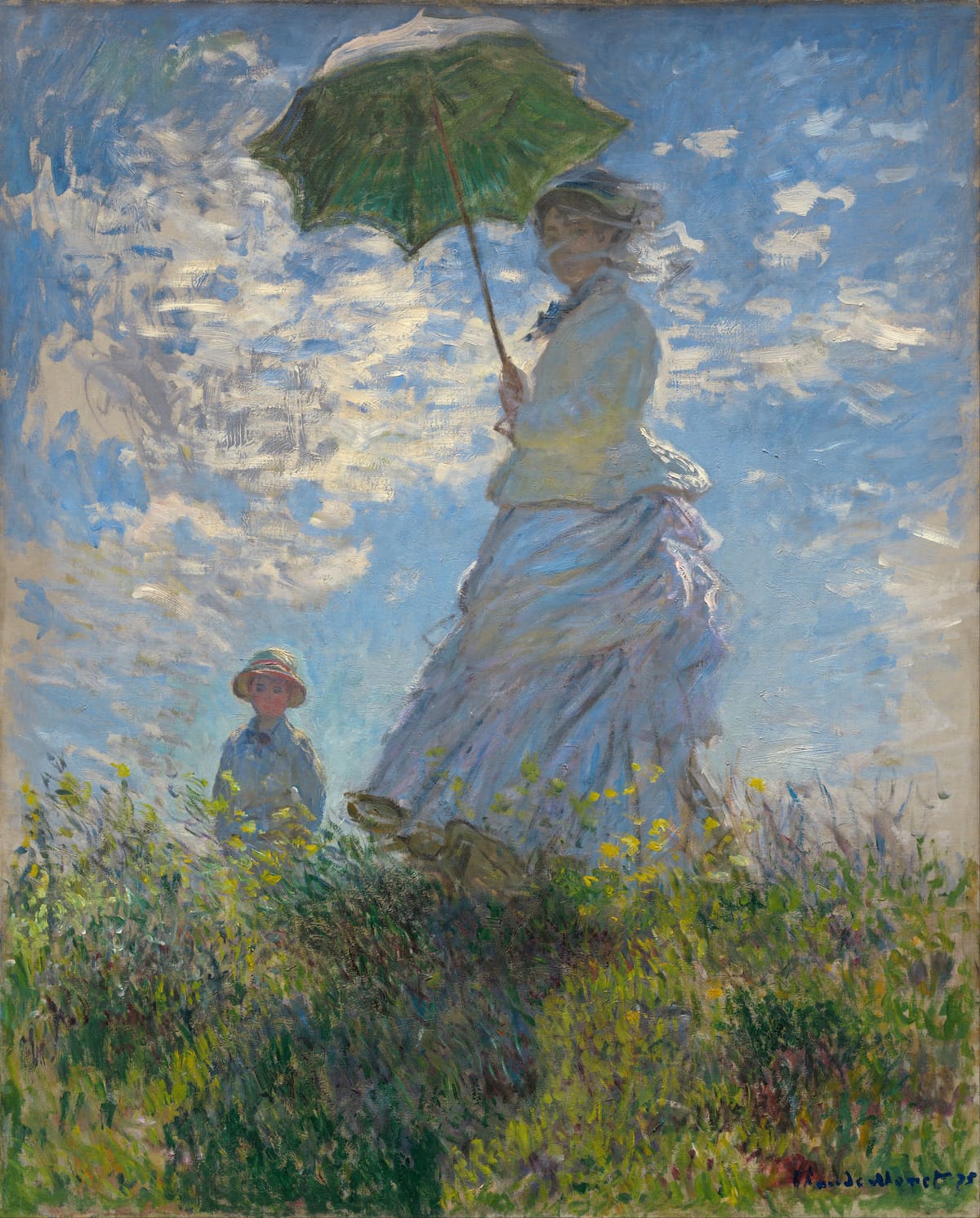
Woman with a Parasol – Madame Monet and Her Son

Houses on the Achterzaan
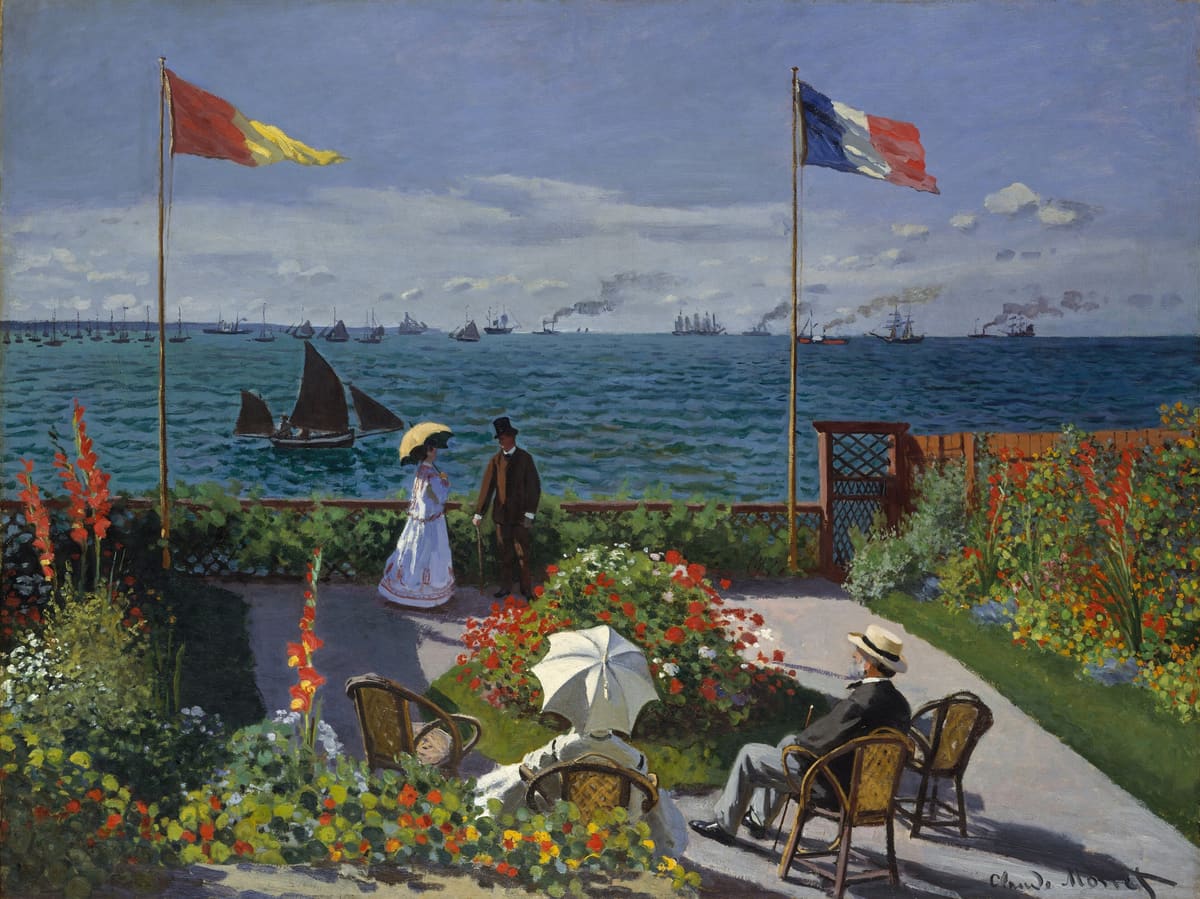
Also connected to Gare Saint-Lazare