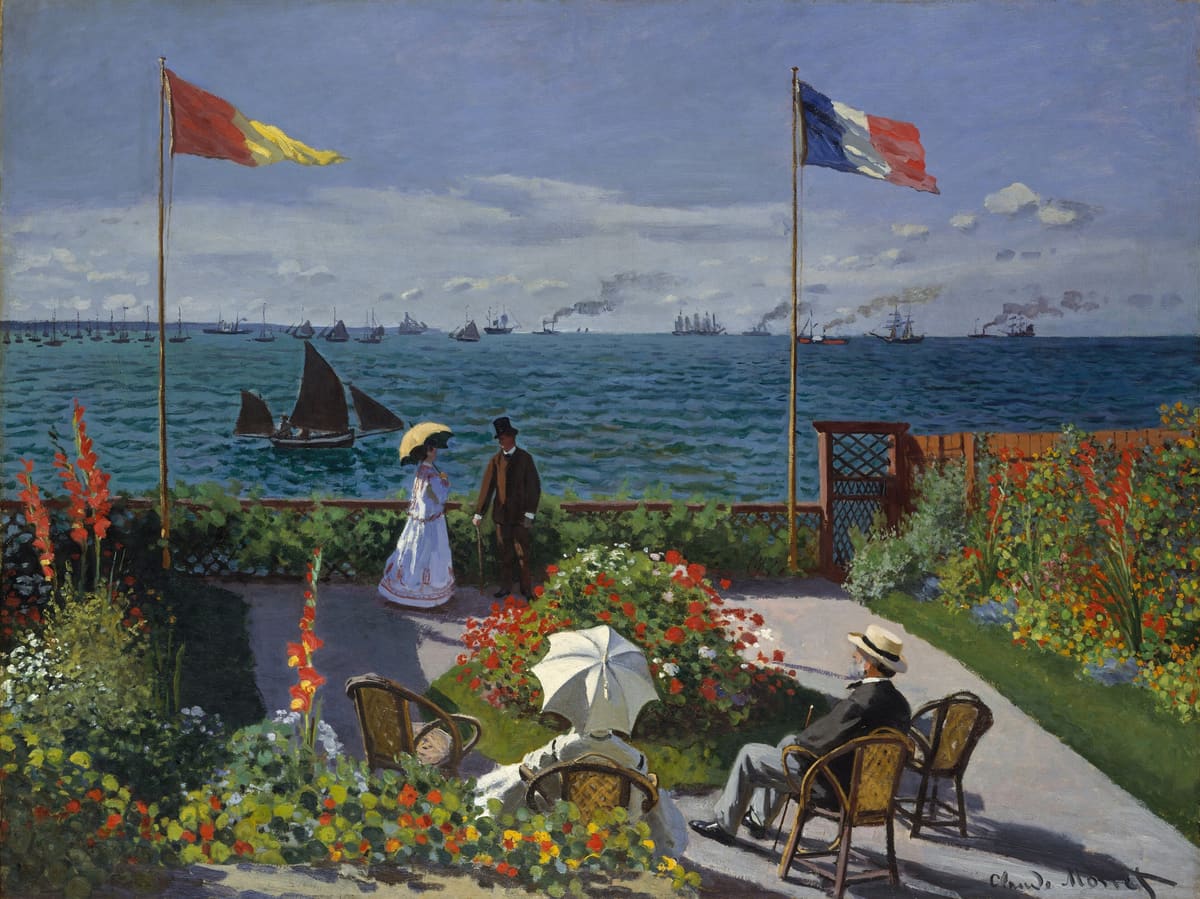
The artist's garden at Giverny
Rows of purple irises under blossoming trees in Monet's own garden at Giverny — the garden is restored and open to visitors.
Giverny (Monet's garden and village)
The painting depicts a real landscape or cityscape. The precise viewpoint the artist used may be unknown, so the marker shows the general area.
The artist's garden at Giverny — at a glance
- Artist
- Claude Monet (1840–1926)
- Year
- 1900
- Movement
- Impressionism
- Place
- Monet's garden (Clos Normand), Giverny, Normandy, France
- Viewpoint
- Along the iris borders of Monet's own garden — restored and open to visitors
- Medium
- Oil on canvas
- Dimensions
- c. 81 × 92 cm
- Now at
- Musée d'Orsay, Paris
Overview
The Artist's Garden at Giverny is one of a small group of canvases Claude Monet painted in 1900 of the iris beds in his own garden. It looks down a series of parallel borders solid with purple and blue irises, between them strips of green, with pink-blossoming fruit trees and the shapes of other trees behind, and a strip of pale sky. It is oil on canvas, about 81 by 92 cm, and it hangs in the Musée d'Orsay, Paris.
The story behind the painting
Scholarship Monet rented, then in 1890 bought, a house at Giverny, a village on the Seine about 75 km north-west of Paris, and spent the rest of his life making its garden and then painting it. By 1900 the flower garden in front of the house — the Clos Normand — was laid out in long straight beds crossed by arches; the separate water-lily garden, with the Japanese bridge, lay across the road. The garden became his main subject for the last twenty-five years of his life.
Where was The artist's garden at Giverny painted?
Scholarship The picture shows the flower garden immediately in front of Monet's pink house at Giverny, looking along its iris borders. After Monet's death the garden declined, but it was fully restored from the 1970s and the Fondation Claude Monet opened the house and both gardens to the public. The bed layout, the central Grande Allée and the planting scheme follow Monet's, so the scene can be matched closely in the flowering season, allowing for a century of replanting.
How we know
- Depicts Monet's own garden at Giverny; the stored coordinate had collapsed to the geographic centroid of France. Settlement precision — the exact standpoint within the garden is not documented.
What is in the painting?
Long beds of irises run away from the viewer on a slight diagonal, dense with violet, blue and mauve flowers over grey-green leaves, divided by narrow paths or strips of lawn. Fruit trees in pink and white blossom stand among and behind them; taller trees close the top, and a little cool sky shows through. There are no figures — only flowers, foliage and light.
Look closely
The iris borders
Long beds solid with violet, blue and mauve irises run back on a diagonal, filling the canvas.
The blossoming trees
Fruit trees in pink and white flower stand among and behind the beds, breaking the horizontals.
No figures
The garden is empty of people — only flowers, foliage and light, as in most of Monet's late garden work.
The tipped-up beds
The rows are pushed towards the picture surface so colour and pattern matter as much as depth.
Analysis
Composition & perspective
Parallel flowerbeds run back on a diagonal, filling almost the whole canvas with pattern and colour.
Scholarship Monet tips the beds up towards the picture surface so they read as bands of colour as much as as receding rows, with the blossoming trees breaking the horizontals. The design is close to all-over pattern, pointing towards the near-abstract water-lily canvases of his last years.
Colour and light
Massed violets and blues of iris against fresh green, with pink and white blossom and a cool sky.
The dominant note is the purple-blue of the irises, set against the yellow-greens of new leaves and lawn and the pinks and creams of the fruit blossom — complementary contrasts that make the beds vibrate. The brushwork is loose, quick and thick.
History & provenance
The painting entered the French national collections and hangs in the Musée d'Orsay, Paris. Monet's house and gardens at Giverny are run by the Fondation Claude Monet and open to visitors.
Sources
- Musée d'Orsay, Paris — collection entry for Claude Monet, ‘Le Jardin de l'artiste à Giverny’ (1900; oil on canvas, c. 81 × 92 cm)
- Fondation Claude Monet, Giverny — history and restoration of the house and gardens
Frequently asked
Whose garden is this?
Claude Monet's own, at his house in the village of Giverny in Normandy, about 75 km north-west of Paris. He bought the property in 1890 and made the garden his main subject for the rest of his life.
Can you visit it?
Yes. The garden declined after Monet's death but was fully restored from the 1970s; the Fondation Claude Monet opens the house and both the flower garden and the water-lily garden to the public. The scene can be matched closely in the flowering season.
Which part of the garden is shown?
The flower garden in front of the house — the Clos Normand — with its long straight beds, here planted with irises, looking along the borders.
Are there people in the painting?
No. Like most of Monet's late garden pictures it has no figures — only the flowers, foliage and light.
Where is the painting now?
In the Musée d'Orsay, Paris.
Related paintings

More by Claude Monet
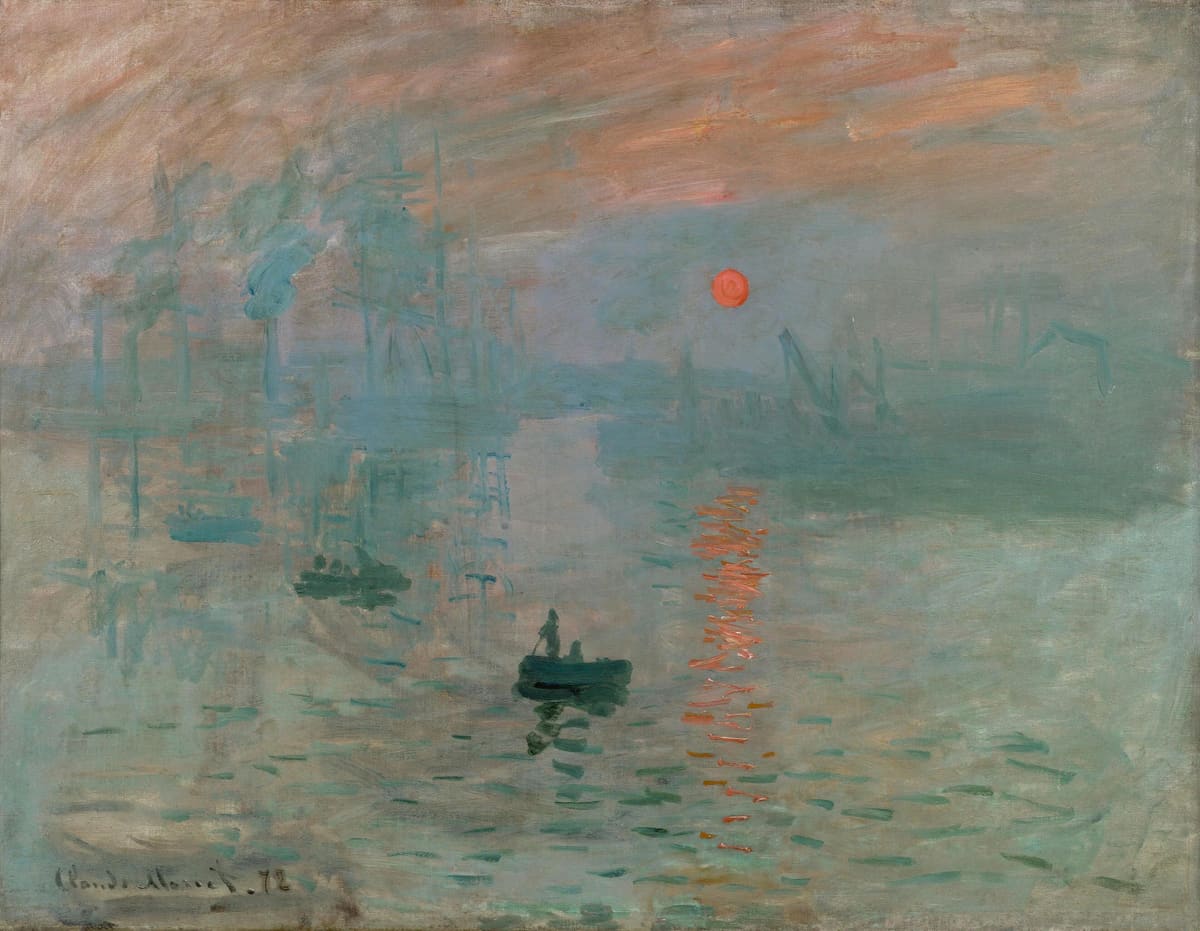
Impression, Sunrise
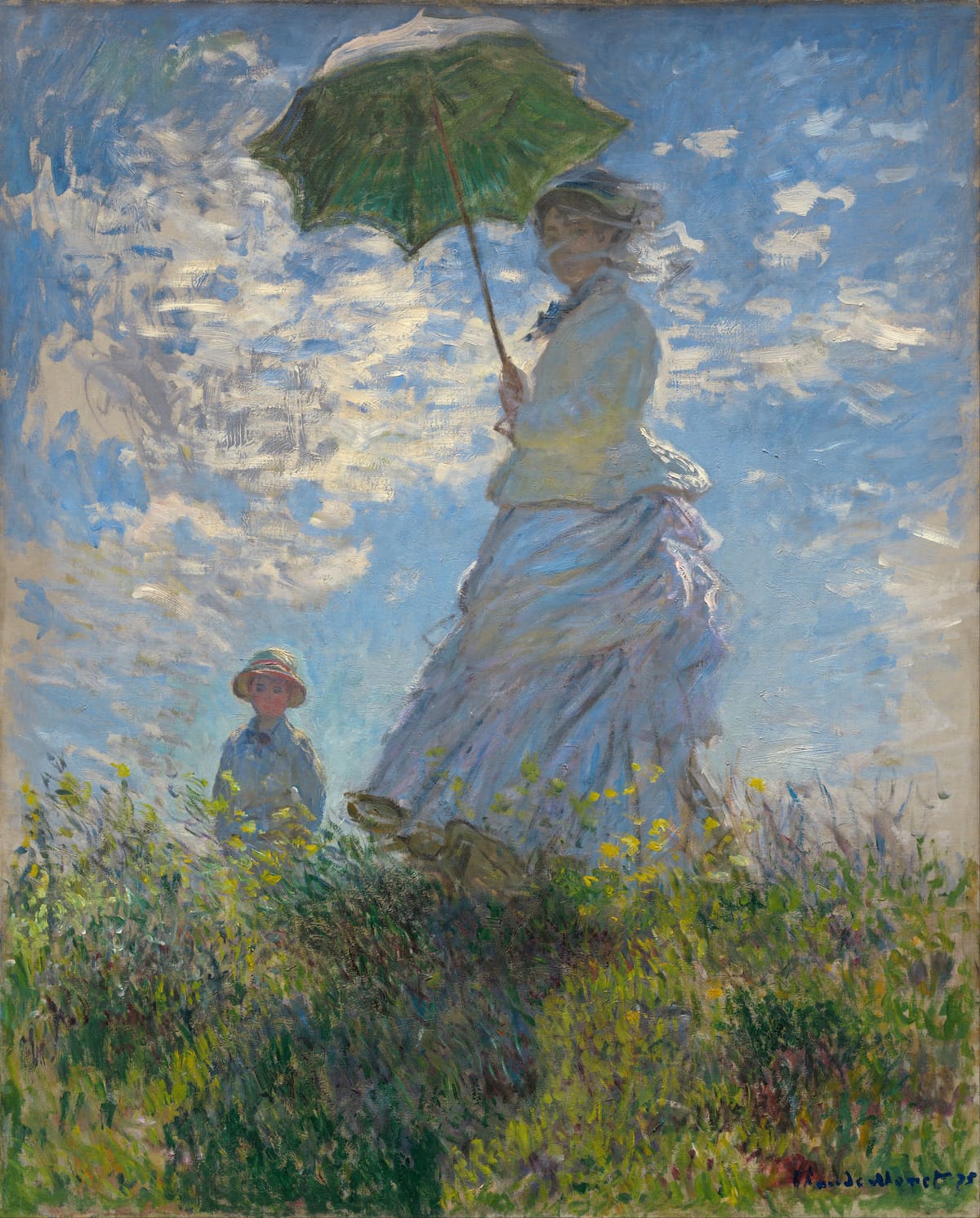
Woman with a Parasol – Madame Monet and Her Son

Houses on the Achterzaan